
In 2026, power equipment pricing may be shaped less by finished-product competition and more by the hidden volatility of semiconductors, copper, aluminum, motors, and grid-control components. For financial approvers, this shift changes how budgets, supplier evaluations, and project margins should be assessed. Understanding the real cost drivers behind power equipment is becoming essential for controlling risk and making more accurate investment decisions.
For organizations planning substations, industrial drives, backup generation, renewable integration, switchgear modernization, or grid-support upgrades, the old pricing logic is no longer sufficient. A vendor’s quoted price may remain stable for 30 to 60 days, while underlying component costs move weekly. That gap matters because power equipment is often assembled from globally sourced inputs with different lead times, currency exposures, and compliance constraints.
For finance teams, the practical question is not simply whether power equipment will become more expensive. The more useful question is which components are most likely to alter total project cost, working capital pressure, delivery risk, and warranty exposure. This is where a component-driven view becomes more valuable than a finished-product comparison.
GPEGM’s intelligence perspective is especially relevant in this environment. In a market shaped by electrification, digital grid expansion, carbon policy, and industrial automation, pricing decisions increasingly depend on material availability, power electronics architecture, and cross-border supply chain resilience. Financial approvers who understand these drivers can negotiate better, budget earlier, and avoid margin erosion after approval.
Why component costs are becoming the real pricing engine
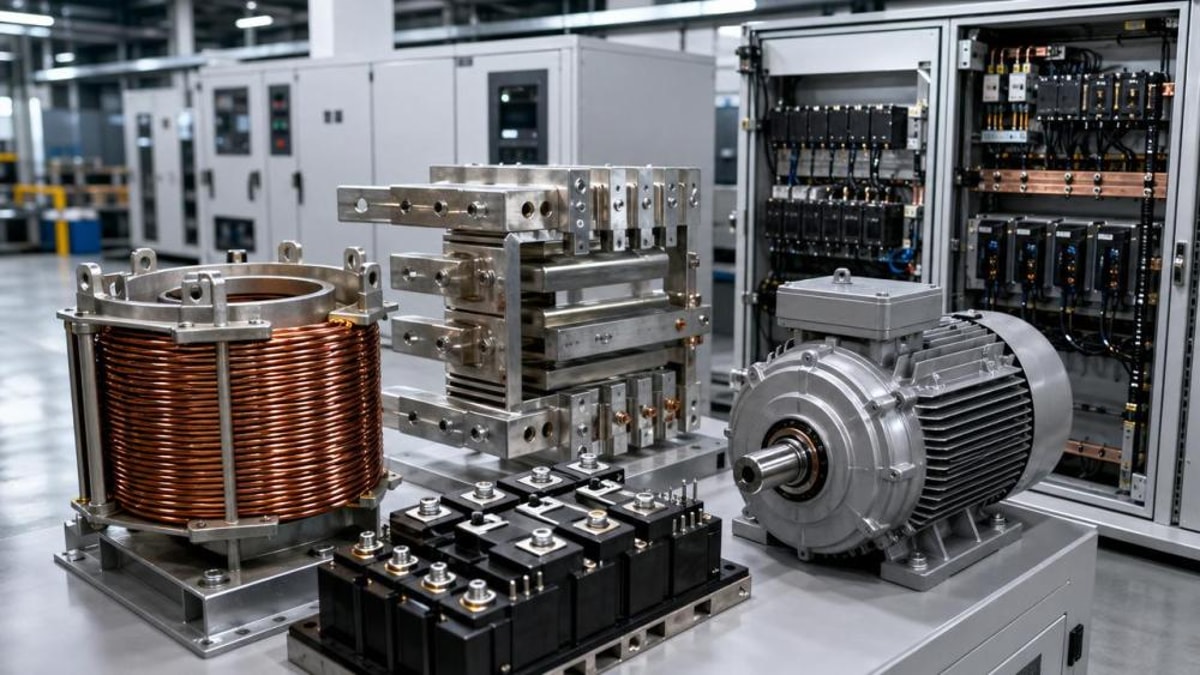
Power equipment includes transformers, switchgear, inverters, motor drives, generator control systems, cable assemblies, and protection devices. In many of these categories, 45% to 75% of the cost base can be traced to a concentrated group of inputs: copper, aluminum, silicon devices, magnetic materials, precision motors, insulation systems, and digital control boards. When these inputs move, final prices follow, even if competition among equipment vendors remains intense.
This is particularly visible in projects with lead times of 8 to 24 weeks. A financial approver may sign off on a budget based on a quarter-one estimate, yet the actual procurement release may occur in quarter two or three. In that period, semiconductor allocation, freight changes, or metal cost swings of 5% to 15% can materially affect the supplier’s ability to honor the original figure without revising specifications, delivery dates, or payment terms.
Unlike generic industrial products, power equipment often contains high-value engineered subassemblies that cannot be replaced quickly. A wide-bandgap semiconductor module, a high-efficiency motor core, or a digital relay board may represent a relatively small portion of unit count but a large share of risk. A single constrained component can delay factory testing, shipping, and site commissioning by 2 to 6 weeks.
The five component groups finance teams should monitor
Instead of reviewing power equipment pricing only at the package level, approvers should ask suppliers to identify cost sensitivity across core component categories. This makes budgets more realistic and change-order discussions more transparent.
- Conductive metals: Copper and aluminum strongly influence cables, busbars, windings, and transformer-related assemblies.
- Power semiconductors: IGBTs, MOSFETs, rectifiers, and control chips affect inverters, UPS systems, variable frequency drives, and smart switchgear.
- Electromechanical assemblies: Motors, cooling fans, contactors, and precision actuators impact drive systems and control cabinets.
- Digital control components: PLC-compatible boards, communication modules, relays, sensors, and HMI elements affect smart grid and automation equipment.
- Insulation and enclosure materials: Resin systems, specialty plastics, coated steel, and thermal management materials influence both compliance and durability.
A supplier that can break down these five areas is usually easier to evaluate than one that offers only a lump-sum quote. For financial approvers, visibility into cost structure often matters more than the initial headline discount.
How key components influence pricing, lead time, and budget accuracy
The table below summarizes how common component groups affect power equipment pricing. It is not a universal formula, but it offers a practical framework for budget review, variance analysis, and supplier negotiation across many power and grid-related purchases.
The most important takeaway is that pricing pressure does not come from one source. In many power equipment categories, metals create visible cost movement, while semiconductors and control components create schedule risk. Finance teams should model both. A project that is 4% over budget but delivered on time may be less harmful than a project delayed 5 weeks and unable to begin revenue-generating operations.
Budgeting beyond the purchase price
A component-driven review improves budget accuracy because it captures costs that often appear after approval. These include factory test rescheduling, alternate component qualification, expedited freight, field retrofits, and longer site labor windows. On complex projects, those indirect effects can add another 3% to 8% above the original equipment quote.
This matters in sectors such as utilities, infrastructure, mining, manufacturing, data centers, and commercial energy systems. Even when the same power equipment rating is specified, the procurement outcome can vary significantly depending on the supplier’s component sourcing strategy and stock position.
A practical review checklist
- Ask which 3 to 5 components are most likely to trigger repricing within the quote validity period.
- Confirm whether metal surcharges are fixed, indexed, or adjustable at order release.
- Identify components with lead times above 10 weeks and request contingency options.
- Separate base equipment price from commissioning, freight, and spare-part allowances.
- Check whether alternative components affect warranty terms, efficiency ratings, or compliance documents.
What financial approvers should change in 2026 procurement reviews
If component volatility becomes a bigger pricing driver, then financial approval methods must also change. Traditional comparison based on “lowest total quote wins” can miss hidden exposure. A better process is to evaluate power equipment through three layers: commercial price, component stability, and execution risk. That approach gives a more realistic view of total financial impact over a 6- to 18-month project horizon.
In practice, this means requesting more structured quotation data from suppliers. Instead of a single commercial page, finance teams should ask for a cost-risk note covering component sensitivity, validity period, substitution rules, warranty conditions, and delivery assumptions. This does not require disclosure of proprietary margins. It simply creates a better basis for approval.
For medium and large purchases, a two-stage approval model is often effective. Stage one approves the technical-commercial baseline. Stage two confirms component-sensitive items before purchase order release, especially when order placement occurs more than 30 days after budget sign-off. This small governance step can reduce surprise adjustments and improve internal accountability.
Recommended decision criteria for supplier evaluation
The table below can be used by finance, procurement, and technical teams when comparing bids for power equipment with similar specifications.
This comparison model helps financial approvers avoid a common trap: selecting the lowest quote without understanding which bidder has embedded greater cost uncertainty. In a component-sensitive market, the most competitive number on day one may not be the lowest total cost at installation.
Four procurement adjustments worth implementing
- Reserve a 5% to 10% contingency for projects with long-lead semiconductor or copper exposure.
- Align approval timing with supplier quote windows to avoid revalidation every 30 days.
- Use milestone-based payment plans when factory completion depends on constrained components.
- Require a bill-of-risk summary for orders above your internal threshold, such as major grid, drive, or backup power packages.
Common pricing mistakes in power equipment buying
One frequent mistake is assuming all technically compliant suppliers face the same component conditions. They do not. One vendor may hold inventory of control boards and copper-based assemblies, while another may depend on spot purchases. Their quotations can look similar today but behave very differently after award. For finance teams, this means identical equipment specifications do not guarantee identical commercial risk.
A second mistake is focusing only on capex while ignoring delay costs. In many industrial and grid projects, every week of delay affects contractor mobilization, commissioning labor, rental equipment, or postponed energization. Even a 2-week delay can be more expensive than a 3% equipment premium if the project is tied to production startup or power availability.
A third mistake is accepting broad substitution language without technical and financial boundaries. Substitution can be reasonable and sometimes necessary, but it should not compromise efficiency class, protection logic, interoperability, or spare-part standardization. Finance approvers should ensure any substitution process is documented before release, not after supply disruption occurs.
Risk signals that deserve extra review
- A quote that is 8% to 12% lower than the competitive range without a clear component explanation.
- Lead times described only as “subject to availability” with no long-lead item breakdown.
- No distinction between ex-works pricing, freight assumptions, and site-ready delivery cost.
- Warranty terms that become conditional if alternate components are used after award.
- No clear factory acceptance schedule, despite complex power electronics or control integration.
These warning signs do not automatically disqualify a supplier, but they should trigger deeper review. In component-driven pricing environments, ambiguity is often more costly than a modest premium attached to a transparent offer.
FAQ for finance-led evaluation
How long should a power equipment quote remain valid? For standard packages, 30 to 45 days is common. For metal-intensive or electronics-heavy systems, a 15- to 30-day component review checkpoint may be more realistic if market volatility is high.
Should every project include a contingency? Not always, but projects with imported semiconductors, custom drives, smart switchgear, or high copper content usually justify a 5% to 10% budget buffer.
What should be approved before purchase order release? At minimum: final specification freeze, long-lead component confirmation, substitution rules, delivery milestone plan, and warranty scope tied to the exact bill of materials.
A stronger 2026 approval model for power equipment investment
The strongest approval model for 2026 is not based on predicting every commodity or semiconductor move. It is based on building a disciplined review framework. Financial approvers should ask whether the quoted power equipment price reflects stable sourcing, whether the lead time is supported by actual component availability, and whether the supplier can manage substitutions without creating hidden cost later in the project.
This framework is especially useful as electrification accelerates across utilities, buildings, transport, data infrastructure, manufacturing, and distributed energy. More projects are relying on digitally controlled, high-efficiency, and grid-responsive equipment. That means more dependency on advanced semiconductors, communication modules, and specialized materials. The procurement challenge is no longer only about buying hardware. It is about buying reliable component access and controlled execution.
For B2B decision-makers, the priority should be clarity, not just price compression. A supplier or intelligence partner that can interpret component trends, explain lead-time constraints, and support commercially sound procurement decisions will create value long after the initial quotation is issued. That is where informed market visibility becomes a financial advantage.
If your team is evaluating power equipment budgets, supplier offers, or upcoming grid and industrial projects, now is the right time to review cost assumptions at the component level. Connect with GPEGM to gain deeper visibility into pricing drivers, sourcing risks, and practical decision frameworks that support better approvals, more resilient procurement, and stronger project outcomes. Contact us now to get tailored insights, discuss product details, or explore more solution options for your next power equipment investment.
Related News
- Industrial Infrastructure Costs Are Shifting in Key Project AreasMay 06, 2026Industrial infrastructure costs are shifting across transmission, automation, and energy systems. Discover key cost drivers, budget risks, and smarter investment strategies.
- Energy Market Price Trends: What to Watch in 2026May 06, 2026Energy market trends for 2026: track price volatility, grid bottlenecks, electrification, and equipment costs to spot risks, opportunities, and smarter investment signals.
- Distributed Power Generation Costs in 2026: What Is Changing First?May 05, 2026Distributed power generation costs are shifting in 2026. Discover which expenses change first, what risks matter most, and how to protect project value before investing.
- Power equipment pricing in 2026 may depend more on componentsApr 30, 2026Power equipment pricing in 2026 may hinge on components like semiconductors and copper. Learn the hidden cost drivers, reduce procurement risk, and make smarter budget decisions.
Related News
- 00
0000-00
Smart Grid Technology Changes That Are Improving Grid Control - 00
0000-00
Electrical Engineering Solutions That Fit Complex Site Conditions - 00
0000-00
Green Energy Technology Trends Shaping New Investment Plans - 00
0000-00
Industrial Bidding Mistakes That Can Delay Project Approval - 00
0000-00
Industrial Infrastructure Costs Are Shifting in Key Project Areas