
Energy transition strategies often appear robust on paper, but their true viability emerges only when grid capacity, transmission bottlenecks, and system flexibility are put under real-world pressure. For business evaluators, understanding how infrastructure constraints reshape investment value, technology adoption, and market readiness is essential to judging whether ambitious energy transition plans can deliver reliable and scalable outcomes.
Why the energy transition is entering a grid reality check
The market conversation around the energy transition has changed noticeably. A few years ago, most strategic discussions focused on generation targets, carbon reduction pathways, and headline renewable capacity additions. Today, the center of gravity is shifting toward a harder question: can grids absorb, move, and balance the power being added? This is no longer a technical side issue. It is becoming one of the main filters through which projects, policies, and valuations are judged.
This shift matters across industries because the power system now carries more responsibilities at once. It must integrate variable solar and wind, support electrified transport, enable digital industry, and maintain resilience during extreme weather and geopolitical disruption. In that environment, grid capacity is not just an engineering metric. It is a business constraint that determines whether energy transition plans remain bankable, insurable, and operationally credible.
For evaluators reviewing market opportunities, the strongest signal is that grid adequacy has become a leading indicator of execution risk. Regions with ambitious decarbonization goals but slow interconnection reform, delayed transmission upgrades, or weak distribution networks may still attract attention, but they also carry a higher probability of schedule slippage, curtailment, and cost escalation.
What has changed in the current market environment
- Renewable deployment is moving faster than grid reinforcement in many markets.
- Interconnection queues are becoming longer and more uncertain.
- Electrification is increasing load growth after years of relatively flat demand in some economies.
- System operators are placing higher value on flexibility, stability, and controllability.
- Investors are treating network access and dispatch risk as core diligence items.
Why this matters beyond the utility sector
The energy transition affects manufacturers, logistics operators, digital infrastructure providers, heavy industry, real estate developers, and public agencies. Any organization planning electrified assets, on-site generation, storage, or power-intensive expansion is now exposed to grid timing, connection limits, and local network quality. In practical terms, a strong decarbonization strategy may fail commercially if the surrounding grid cannot support commissioning schedules or operating profiles.
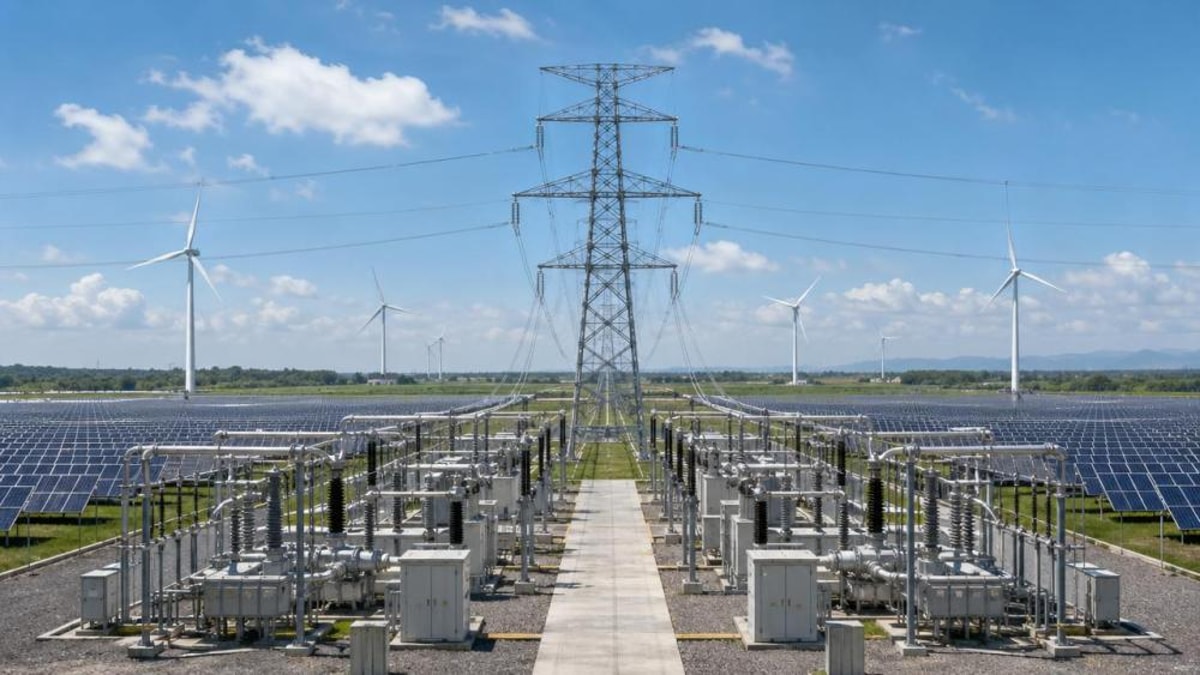
The main forces pushing grid constraints to the top of the energy transition agenda
Several reinforcing forces are accelerating this reality check. The first is the sheer speed of renewable deployment. Utility-scale solar and wind can be built faster than major transmission corridors, substation expansions, or permitting reforms. That timing mismatch creates a structural imbalance: generation enters the pipeline quickly, while network reinforcement remains slow, capital-intensive, and administratively complex.
The second force is load transformation. Data centers, electric vehicle charging, heat pumps, electrolyzers, and industrial electrification are changing the shape, location, and volatility of demand. Legacy grids were not designed for many of these load patterns. Even where total national capacity appears adequate, local distribution networks may be too weak to serve new commercial clusters or industrial expansions.
A third driver is the growing importance of power quality and system services. As inverter-based resources increase, grids need more advanced controls, storage, reactive power support, digital monitoring, and coordinated protection. The energy transition is therefore not only about adding green megawatts. It is about redesigning the operating logic of the power system.
Trend signals evaluators should monitor
A market pattern worth noting
In many jurisdictions, policy ambition is still outrunning implementation capacity. Targets remain important because they shape market direction, but business decisions increasingly depend on the practical readiness of wires, substations, interconnectors, converters, and control systems. That is why the energy transition now rewards not only low-carbon vision, but also infrastructure realism.
How grid bottlenecks are changing value across the energy transition chain
Grid constraints do not affect every participant in the same way. For renewable developers, the most visible impact is often delay and curtailment risk. For industrial users, the challenge may be connection timing, tariff exposure, or insufficient supply quality for sensitive operations. For equipment makers, constrained grids can actually create opportunity by increasing demand for transformers, power electronics, protection systems, digital monitoring, storage integration, and efficient drives.
This uneven impact is why business evaluators should avoid broad assumptions. A market described as “strong for the energy transition” may still be weak for specific asset classes if local network conditions are poor. Conversely, a market with slower renewable build-out may offer attractive opportunities in grid modernization, high-efficiency motors, switchgear digitization, wide-bandgap semiconductor applications, and distributed energy controls.
The strategic implication is clear: value is migrating toward technologies and business models that improve flexibility, reduce losses, increase controllability, or bypass congestion. The transition is no longer judged solely by how much clean power is added, but by how effectively the system can deliver useful power where and when it is needed.
Impact by stakeholder group
A notable shift in competitive advantage
Companies that can translate grid complexity into commercial clarity are gaining an edge. That includes firms able to quantify hosting capacity, model dispatch constraints, optimize drive efficiency, integrate storage, or align equipment strategy with network upgrade cycles. In this phase of the energy transition, technical intelligence increasingly supports commercial differentiation.
Where business evaluators should look for stronger signals
For commercial assessment, headline capacity targets are no longer sufficient. Evaluators need to ask whether the supporting grid architecture is catching up. This means examining not only national policy direction, but also regional network readiness, transmission expansion status, distribution bottlenecks, equipment lead times, and the availability of flexibility resources. The quality of these signals often tells more about near-term opportunity than broad policy language alone.
A useful approach is to separate market attractiveness into two layers. The first layer is ambition: decarbonization goals, electrification plans, and investment intent. The second is deliverability: grid capacity, permitting speed, supply chain access, and digital operating capability. Markets with balanced strength in both layers tend to offer more resilient opportunities across the energy transition value chain.
This framework also helps avoid common evaluation mistakes. For example, a region with aggressive renewable procurement may still underperform if transmission remains blocked. Likewise, a market with moderate policy visibility may become attractive if it is quietly investing in substations, automation, energy storage integration, and advanced power electronics.
Key diligence questions
- How long are grid connection approvals and what assumptions are realistic?
- Is congestion local, regional, or seasonal in nature?
- What share of project economics depends on unconstrained dispatch?
- Are storage, demand response, or smart controls economically justified?
- Which equipment categories face the highest procurement risk?
- How exposed is the business case to policy delays or interconnection rule changes?
Why local detail now matters more
The energy transition is often discussed at national or global scale, but many commercial outcomes are decided at the local node. Feeder limitations, substation capacity, industrial park electrification plans, and municipal permitting practices can determine whether a project proceeds smoothly or stalls. Strong evaluation therefore requires moving from macro enthusiasm to site-level realism.
What strategic responses are becoming more credible
As the energy transition meets grid constraints, the most credible responses are those that improve optionality rather than rely on a single infrastructure assumption. Hybrid generation plus storage is one example. Another is distributed energy architecture that reduces dependence on overloaded networks. Industrial users are also reassessing motor systems, variable speed drives, and digital power management because energy efficiency now contributes not only to sustainability goals, but also to grid compatibility and operating resilience.
Digitalization is becoming especially important. Smart switchgear, advanced monitoring, predictive maintenance, and power flow analytics can unlock hidden capacity, improve reliability, and support better investment timing. In parallel, wide-bandgap semiconductor adoption in converters and inverters may improve efficiency, thermal performance, and controllability in applications where grid support functions are increasingly valuable.
For suppliers and solution providers, this means the market is moving beyond simple equipment sales. Buyers increasingly prefer integrated offers that combine hardware, software, grid intelligence, and lifecycle visibility. That trend aligns with how platforms such as GPEGM interpret the market: the future of the energy transition depends not only on energy generation, but on the stitched intelligence linking power equipment, digital grid capability, and industrial demand.
Practical response priorities
- Prioritize projects with clearer grid access or modular scaling pathways.
- Evaluate storage and flexible load as commercial tools, not just technical add-ons.
- Track transformer, cable, switchgear, and converter lead times early.
- Strengthen local network due diligence before capital commitment.
- Favor technologies that improve efficiency, controllability, and interoperability.
From ambition to execution discipline
The next phase of the energy transition will likely reward disciplined execution more than symbolic ambition. Markets that modernize grids, streamline interconnection, and support flexible assets should attract stronger confidence. Businesses that align their strategy with those realities can reduce downside risk while capturing the upside created by grid investment, electrification, and digital infrastructure upgrades.
How to judge whether an energy transition plan is truly investment-ready
A robust plan should show more than emissions intent or renewable volume. It should demonstrate how network constraints will be addressed, how flexibility will be sourced, how equipment bottlenecks will be managed, and how economics hold up under delayed or partial grid availability. If these elements are missing, the plan may still be directionally positive, but it is not yet fully investment-ready.
For business evaluators, the central judgment is not whether the energy transition is real. It is whether a specific market, project, or technology path is aligned with the physical and digital grid conditions required for scale. That distinction is increasingly important as more capital competes for fewer truly deliverable opportunities.
If enterprises want to judge how this trend affects their own business, they should confirm four things: where grid limits are most likely to emerge, which assets depend on timely interconnection, what flexibility options can protect value, and how fast local infrastructure is actually evolving. Those answers will do more than validate strategy. They will determine whether energy transition plans remain convincing when real grid capacity is finally tested.
Related News
- Green Energy Technology Trends Shaping New Investment PlansMay 06, 2026Green energy technology trends are reshaping investment plans. Explore smart grids, efficient drives, and distributed energy insights to identify lower-risk, future-ready opportunities.
- Industrial Bidding Mistakes That Can Delay Project ApprovalMay 06, 2026Industrial bidding mistakes can stall project approval. Learn the top errors in compliance, pricing, documentation, and stakeholder alignment—and how to avoid costly delays.
- Carbon Neutrality Goals Are Reshaping Power Investment PrioritiesMay 05, 2026Carbon neutrality is reshaping power investment priorities. Discover where capital is moving—from distributed energy to smart grids—and how businesses can reduce risk and capture long-term value.
- What makes smart grid projects harder to scale than expected?Apr 30, 2026Smart grid projects often stall at scale due to legacy systems, fragmented standards, cybersecurity, and regulation. Discover the hidden barriers shaping faster grid modernization.
Related News
- 00
0000-00
Smart Grid Technology Changes That Are Improving Grid Control - 00
0000-00
Electrical Engineering Solutions That Fit Complex Site Conditions - 00
0000-00
Green Energy Technology Trends Shaping New Investment Plans - 00
0000-00
Industrial Bidding Mistakes That Can Delay Project Approval - 00
0000-00
Industrial Infrastructure Costs Are Shifting in Key Project Areas