
Smart grid projects promise resilience, efficiency, and cleaner power systems, yet many scale more slowly than planners expect. From fragmented standards and legacy infrastructure to cybersecurity risks, financing gaps, and regulatory complexity, the path to expansion is rarely straightforward. For researchers tracking energy transition and grid modernization, understanding these hidden barriers is essential to evaluating where smart grid deployment can truly accelerate.
What smart grid scaling really involves
A smart grid is not a single product, software suite, or utility upgrade. It is a layered system that connects physical grid assets with sensors, communications, analytics, distributed energy resources, and control platforms. That broad scope is one reason smart grid initiatives often look easier on paper than they are in practice. A pilot may succeed in one district, but scaling it across a region means integrating different substations, network topologies, metering systems, vendors, and operating rules.
For information researchers, the key point is that scale is not only about adding more devices. It also requires operational consistency, institutional coordination, and long-term interoperability. Utilities must align engineering standards, cybersecurity frameworks, workforce skills, capital planning, and customer participation. When any one layer lags behind, the wider smart grid roadmap slows down.
This is why many smart grid programs advance in uneven stages. Advanced metering may move quickly, while distribution automation, grid-edge intelligence, or demand response remain limited. The challenge is rarely a lack of interest. More often, it is the difficulty of turning isolated digital wins into a stable, system-wide operating model.
Why the topic matters now
Pressure on electricity networks is growing from electrification, renewable integration, data centers, electric vehicles, and climate-related disruptions. In that environment, smart grid investment is no longer seen as optional modernization. It is increasingly tied to grid resilience, flexibility, and decarbonization targets. Yet the gap between strategic ambition and implementation capacity remains large.
Platforms such as GPEGM matter in this context because scaling decisions depend on connected intelligence, not isolated technical data. Researchers and decision makers need visibility into component trends, digital grid architectures, power electronics development, standards evolution, and market signals such as copper prices, high-voltage expansion, and distributed generation demand.
Core layers that must scale together
- Field hardware, including meters, sensors, relays, switchgear, transformers, and edge devices
- Communications networks that move data reliably across urban and remote assets
- Software and analytics for monitoring, forecasting, optimization, and fault response
- Operational processes, from maintenance to outage management and dispatch
- Regulatory, financial, and workforce systems that support long-term rollout
A project can prove the value of one layer in isolation, but smart grid scale depends on synchronized progress across all of them.
Why smart grid projects become harder as deployment expands
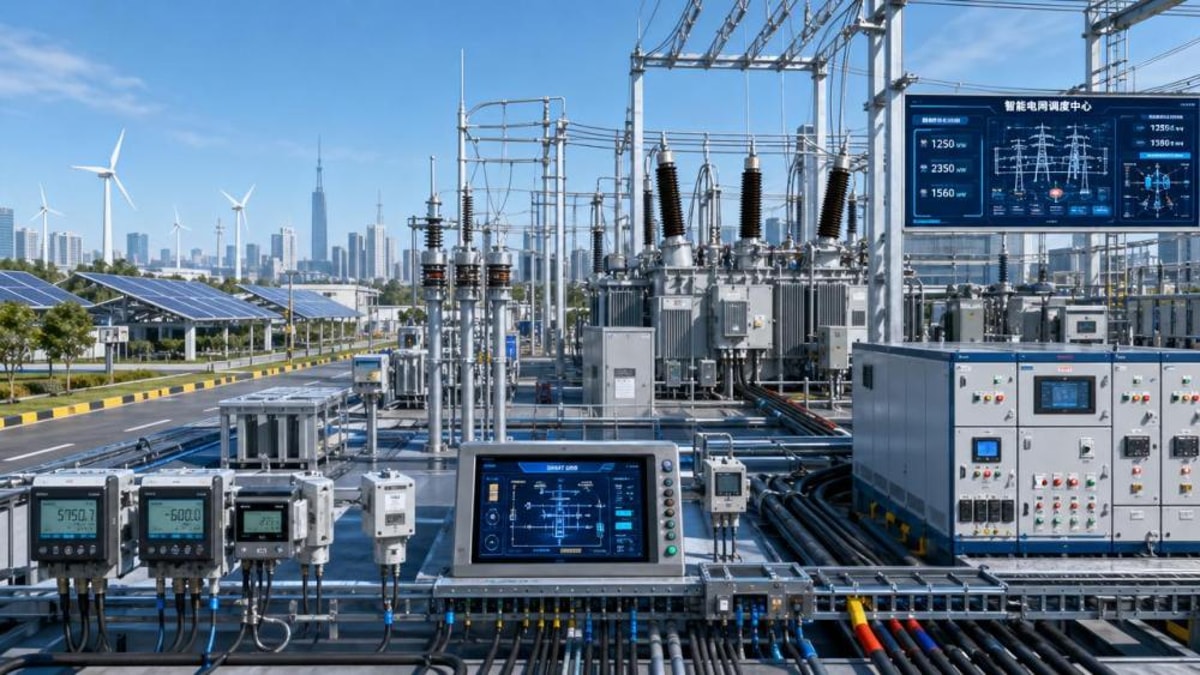
The first major barrier is legacy infrastructure. Many grids were built for one-way power flow, limited data visibility, and predictable centralized generation. Smart grid scaling requires these older assets to interact with digital systems that were designed for flexibility and real-time decision making. In reality, old and new equipment often speak different technical languages, have different performance assumptions, and operate under different maintenance routines.
The second barrier is fragmented standards and vendor ecosystems. Utilities may procure intelligent devices from multiple suppliers over many years. Even when vendors claim compliance, implementation details can vary. That creates integration overhead, data normalization problems, and upgrade risk. In a pilot, engineers can manually manage exceptions. At scale, those exceptions multiply into costly structural friction.
A third challenge is that smart grid benefits are distributed unevenly across stakeholders. Utilities may carry the capital burden, regulators may control cost recovery, consumers may expect lower tariffs, and governments may prioritize climate or industrial goals. When value is spread across different parties but investment responsibility is concentrated in one place, expansion tends to slow.
A practical view of the main scaling barriers
These barriers explain why smart grid scaling is often nonlinear. A program may appear technically mature, yet still slow down because institutional and operational systems have not matured at the same pace.
Industry background shaping smart grid deployment
Across industries, the importance of the smart grid is rising because electricity has become the platform for broader economic transformation. Manufacturing depends on power quality and automation. Commercial buildings need flexible load management. Transport electrification adds new peak demand patterns. Renewable integration requires faster balancing and more granular visibility. This wider industrial dependence increases both the urgency and the complexity of grid modernization.
At the same time, energy transition technologies are changing the technical character of the grid. Wide-bandgap semiconductors, advanced inverters, high-efficiency motors, digital switchgear, and intelligent drive systems are all reshaping how power is converted, controlled, and consumed. That means smart grid projects increasingly sit at the intersection of power electronics, communications, software, and infrastructure economics.
For research-oriented audiences, this is where high-authority market intelligence becomes valuable. Understanding the pace of smart grid scale requires more than tracking utility announcements. It also means watching component cost trends, transmission investment, distributed generation penetration, carbon policy shifts, and standardization progress across regions.
Why some markets scale faster than others
Markets with clearer regulatory frameworks and stronger utility digital capabilities generally expand smart grid infrastructure faster. They often have better data governance, established recovery mechanisms for grid modernization spending, and more consistent interoperability requirements. By contrast, fragmented governance and uneven network quality can turn even well-funded programs into long implementation cycles.
Urban density also changes the scaling equation. Dense networks can support strong returns from outage reduction, demand management, and EV coordination, but they are operationally complex. Rural networks may benefit from remote monitoring and distributed energy coordination, yet communications coverage and cost recovery can be more difficult. Smart grid value exists in both settings, but the scaling logic differs.
Key market conditions researchers should track
- Regulatory clarity around digital grid investment and tariff recovery
- Penetration of rooftop solar, storage, EVs, and other distributed resources
- Transmission and distribution upgrade pipelines
- Supply chain conditions for transformers, semiconductors, cables, and switchgear
- Cybersecurity and data localization requirements
These signals help determine whether a smart grid program is approaching true scale or only extending a pilot mindset.
Where the value of smart grid scaling is real
Despite the obstacles, the value case for a smart grid remains strong when deployment is well designed. The most visible benefit is improved grid visibility. Utilities gain near-real-time awareness of asset status, load behavior, and fault conditions, which supports faster restoration and more efficient maintenance. For power systems under stress, this operational intelligence can be more valuable than simply adding more hardware capacity.
A second benefit is flexibility. Smart grid systems allow operators to manage variable generation, shift demand, optimize distributed resources, and support voltage and frequency stability more effectively. This is critical in grids with growing solar, wind, battery, and EV loads. Without scalable digital coordination, the cost of integrating these resources can rise sharply.
A third benefit is economic efficiency over time. While capital intensity can be high, a scaled smart grid can reduce outage costs, defer some infrastructure expansion, improve asset utilization, and support more targeted maintenance. The challenge is that these gains often emerge across long time horizons and multiple departments, making them harder to capture in traditional project appraisal models.
Typical value by deployment area
For researchers, the lesson is that smart grid value is highly context dependent. Not every market should scale every use case at the same speed. The strongest programs match deployment priorities to actual network stress points and policy goals.
How to evaluate smart grid projects more realistically
A more realistic evaluation starts by asking whether a project is designed for pilot performance or system replication. Many pilots are engineered with exceptional support, custom interfaces, and concentrated expertise. Those conditions do not always survive expansion. Researchers should examine whether the architecture, vendor approach, and operating procedures are built for repeatability across many assets and jurisdictions.
It is also important to separate digital visibility from operational control. A utility may have excellent monitoring dashboards but limited ability to automate switching, coordinate distributed resources, or monetize flexibility. In other words, data collection alone does not equal smart grid maturity. Scale requires decisions and actions to move faster, not just information.
Finally, smart grid analysis should include supply chain and skills readiness. If transformer lead times are long, communications modules are constrained, or grid software talent is scarce, expansion will be slower regardless of strategy. These bottlenecks are especially relevant in energy transition markets where multiple infrastructure sectors are competing for the same components and expertise.
Practical evaluation checklist
- Is the smart grid architecture based on open, scalable interoperability standards?
- Can legacy substations and field devices be integrated without excessive customization?
- Are cybersecurity controls embedded from design through operations?
- Is there a clear financial pathway for cost recovery and long-term value capture?
- Does the workforce have OT, IT, and power systems integration capability?
- Are policy and market rules aligned with distributed energy and demand flexibility goals?
Why intelligence-led assessment matters
This is where a platform such as GPEGM offers strategic value. Smart grid outcomes are shaped by more than local project management. They depend on broader intelligence around power electronics, grid equipment, distribution technology, drive systems, industrial demand, and policy evolution. Decision makers who track these signals in an integrated way are better positioned to distinguish temporary delays from deeper structural constraints.
For information researchers, that means moving beyond simple adoption headlines. The more useful question is not whether a market has announced a smart grid plan, but whether its technical, regulatory, and economic foundations can support scale with resilience.
A grounded outlook for researchers and decision teams
Smart grid projects are harder to scale than expected because they combine infrastructure modernization with digital transformation, market reform, and organizational change. Each of those areas moves at a different speed. That mismatch creates delays that are often underestimated in early planning stages.
Still, slower scaling should not be confused with weak strategic value. In most markets, the smart grid remains central to reliable electrification, renewable integration, and industrial competitiveness. The issue is not whether expansion matters, but how realistically it is sequenced, financed, standardized, and governed.
For research teams, the strongest approach is to evaluate smart grid progress through a systems lens: technology maturity, interoperability, regulation, workforce, supply chains, and measurable operating outcomes. With that broader view, it becomes easier to identify where deployment can accelerate, where hidden risks remain, and which signals deserve close monitoring in the next stage of global grid modernization.
Related News
- Green Energy Technology Trends Shaping New Investment PlansMay 06, 2026Green energy technology trends are reshaping investment plans. Explore smart grids, efficient drives, and distributed energy insights to identify lower-risk, future-ready opportunities.
- Industrial Bidding Mistakes That Can Delay Project ApprovalMay 06, 2026Industrial bidding mistakes can stall project approval. Learn the top errors in compliance, pricing, documentation, and stakeholder alignment—and how to avoid costly delays.
- Carbon Neutrality Goals Are Reshaping Power Investment PrioritiesMay 05, 2026Carbon neutrality is reshaping power investment priorities. Discover where capital is moving—from distributed energy to smart grids—and how businesses can reduce risk and capture long-term value.
- What makes smart grid projects harder to scale than expected?Apr 30, 2026Smart grid projects often stall at scale due to legacy systems, fragmented standards, cybersecurity, and regulation. Discover the hidden barriers shaping faster grid modernization.
Related News
- 00
0000-00
Smart Grid Technology Changes That Are Improving Grid Control - 00
0000-00
Electrical Engineering Solutions That Fit Complex Site Conditions - 00
0000-00
Green Energy Technology Trends Shaping New Investment Plans - 00
0000-00
Industrial Bidding Mistakes That Can Delay Project Approval - 00
0000-00
Industrial Infrastructure Costs Are Shifting in Key Project Areas