
Why These Transformers Matter in Today’s Power Projects
Across industrial parks, commercial buildings, renewable energy support systems, and public infrastructure, power reliability has become a planning issue rather than a purely technical one. Operators are under pressure to reduce unplanned downtime, project managers must balance performance with lifecycle cost, and maintenance teams are expected to keep distribution equipment stable in increasingly complex operating environments. In that context, hermetically sealed oil-immersed transformers in the 400kVA class draw attention because they sit at a practical middle ground: large enough to support substantial loads, yet still flexible enough for decentralized and site-specific deployment.
The growing interest in this segment is tied to several realities. Many facilities are expanding without rebuilding their entire electrical architecture. Rural and suburban networks often need capacity upgrades without introducing overly complicated maintenance routines. At the same time, users are more aware of environmental conditions, installation space, and total operating stability. A sealed design is often considered where exposure to moisture, oxidation risk, or inconsistent maintenance access could affect long-term performance.
For decision-makers, the discussion is not only about nameplate capacity. It is about where this transformer type fits best, what operational problems it may help reduce, and which conditions should be reviewed before procurement. Understanding application scenarios helps buyers avoid under-specification, overinvestment, and mismatches between equipment design and real load behavior.
Typical Application Scenarios
A 400kVA hermetically sealed oil-immersed transformer is commonly suitable for medium-scale power distribution points where steady voltage transformation and dependable insulation performance are required. In many projects, it is selected for secondary distribution networks serving workshops, retail complexes, logistics sites, mixed-use developments, and institutional buildings. These are environments where load demand is significant, but not so large that the project necessarily moves into more specialized transformer configurations.
Industrial users often value this class of transformer when supporting machine tools, pumps, conveyors, ventilation systems, and production support lines. In such settings, load patterns may fluctuate throughout the day, and voltage stability can affect equipment efficiency as well as process continuity. A sealed oil-immersed structure may be preferred when the site wants robust thermal behavior and reduced exposure of insulating oil to outside air.
Commercial and public-service applications also form an important use case. Shopping facilities, schools, clinics, office campuses, and municipal service buildings frequently require dependable distribution equipment with manageable maintenance expectations. Where continuity of lighting, HVAC, elevators, refrigeration, or essential service circuits matters, transformer selection becomes closely tied to operational reputation and tenant or user experience.
How Different Industries Evaluate the Same Equipment Differently
Although the technical platform may be similar, different sectors tend to judge transformer value through different priorities. Manufacturing enterprises may focus on overload behavior, insulation durability, and compatibility with continuous or semi-continuous operation. Commercial property operators may pay more attention to installation footprint, noise considerations, routine servicing practicality, and long-term energy efficiency. Infrastructure projects may place higher weight on resilience, stable supply under varying seasonal conditions, and reduced intervention frequency in remote or busy public locations.
For project contractors and procurement teams, this means the correct choice is rarely made by comparing purchase price alone. The same transformer rating may perform very differently in perceived value depending on ambient temperature variation, load profile, expansion plans, and maintenance staffing. In many scenarios, a sealed oil-immersed model becomes more attractive when the operator wants a relatively mature and proven distribution solution without introducing unnecessary maintenance complexity.
This is also relevant in projects where installation conditions are not ideal. Dust, humidity, and irregular operating cycles can accelerate wear on poorly matched equipment. For facilities that cannot afford frequent shutdown windows, it is often more practical to choose designs known for stable enclosure integrity and reliable insulation protection over time, provided the installation and loading conditions are properly evaluated.
Where the Product Category Fits in Real Procurement Decisions
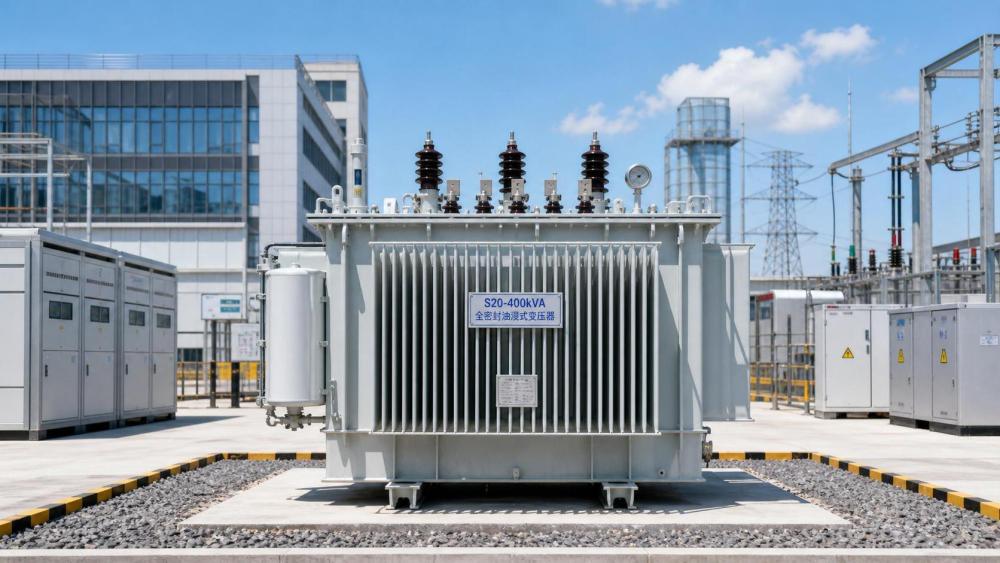
In practical sourcing work, buyers usually assess several layers at once: electrical suitability, enclosure and sealing approach, materials, transport conditions, future maintenance burden, and supplier consistency. Within that broader review, S20-400kVA Hermetically Sealed Oil-Immersed Transformers may be considered for projects that need dependable medium-capacity distribution with attention to oil preservation, equipment longevity, and manageable operating oversight rather than frequent intervention.
This product category is especially relevant when users want a solution that supports day-to-day distribution tasks while also helping address common field concerns such as moisture ingress risk, exposure to oxygen-driven oil degradation, and maintenance planning in sites where technical staff may not always be available on demand. That does not remove the need for inspection, but it may improve the predictability of service intervals in many operating contexts.
Another reason this category is frequently reviewed is that it aligns with projects seeking a balance between proven transformer construction and practical deployment economics. For engineering teams, that balance can be valuable in industrial extensions, utility support points, and facility upgrades where oversizing the equipment would increase capital cost while undersizing it would create thermal and operational stress.
Key Value Points Beyond Basic Capacity
A hermetically sealed oil-immersed transformer is often chosen not simply because it transforms voltage, but because its design can support more stable long-term service conditions. The sealed arrangement typically helps reduce direct contact between internal insulating oil and ambient air. In many applications, this can contribute to better preservation of insulation quality over time, especially where environmental humidity or temperature changes would otherwise place additional stress on the system.
Thermal performance is another practical consideration. Oil-immersed units are widely recognized for effective heat dissipation in many conventional power distribution environments. When correctly specified and installed, they may help facilities handle regular operating loads with less thermal concentration than some alternatives in similar duty conditions. For users managing production continuity or building services, that can translate into steadier operation and lower risk of performance degradation linked to overheating.
The maintenance perspective also matters. Sealed designs are often attractive to after-sales teams and facility operators because they can simplify some aspects of oil management and contamination control when compared with less protected configurations. This does not eliminate the need for inspection, commissioning discipline, or condition monitoring, but it may support a more efficient maintenance strategy in sites where manpower, access, or service windows are limited.
Selection Risks and Questions Buyers Should Not Ignore
One common mistake in transformer procurement is focusing too heavily on rated capacity while paying too little attention to actual load behavior. A nominal 400kVA requirement should be checked against peak demand, power factor characteristics, startup current of major equipment, and possible load expansion over the coming years. If these factors are overlooked, even a technically compliant unit may not deliver the operational margin a site really needs.
Installation environment is another major variable. Buyers should review whether the transformer will operate outdoors or in sheltered areas, how ventilation is handled, whether the site is exposed to corrosive contaminants, and what local safety rules or utility requirements apply. Transport route, installation base, and space for inspection access should also be considered early, because a good transformer can still become a poor project fit if deployment constraints are ignored.
Quality review should extend beyond visible structure. Teams typically benefit from checking material consistency, sealing reliability, winding and insulation workmanship, testing procedures, and delivery support. For project managers, the strongest solution is often the one that combines technical fit with realistic logistics, commissioning coordination, and dependable after-sales response rather than the lowest initial quote.
A Practical Comparison of Application Priorities
What Successful Deployment Usually Depends On
Successful use of this transformer category usually depends on matching the equipment to the real application rather than relying on generic assumptions. Load forecasting should be grounded in actual operating schedules. Protection coordination should reflect the site’s switching and fault conditions. Civil and electrical installation planning should be coordinated early enough to avoid avoidable redesign during project delivery.
From an operational perspective, users often benefit from treating the transformer as part of a system rather than a standalone purchase. Cable routing, upstream and downstream protection, grounding quality, ventilation conditions, and inspection routines all affect real-world performance. A strong procurement outcome is usually tied to this broader systems view, especially when the transformer supports production assets, public service continuity, or tenant-facing infrastructure.
For maintenance teams, the most effective approach is typically preventive rather than reactive. Even where sealed construction reduces some exposure risks, routine checks on temperature behavior, abnormal noise, connection integrity, and external condition remain important. This helps preserve the practical advantages of the equipment and supports longer service life under normal operating conditions.
Conclusion
The relevance of 400kVA hermetically sealed oil-immersed transformers lies in how well they address common distribution challenges across varied sectors. They are often considered where users need dependable medium-capacity power transformation, stable insulation conditions, and a sensible balance between performance and maintenance demands. For researchers, operators, project leaders, and service teams, the key is not simply identifying a transformer that meets rating requirements, but selecting one that aligns with the site’s environment, load profile, maintenance capability, and long-term operating priorities.
When evaluated through real application scenarios rather than catalog language alone, this transformer category becomes easier to place within industrial upgrades, commercial developments, and infrastructure support projects. That practical perspective is often what leads to more resilient purchasing decisions and better long-term power system outcomes.
Related News
- How to size an indoor dry type transformer for a commercial buildingAug 29, 2026Indoor dry type transformer sizing guide for commercial buildings: calculate demand, assess harmonics, ventilation, voltage, fault duty, and future expansion.
- Dry Type Transformer for Building: Key Sizing and Safety ChecksJul 04, 2026Dry type transformer for building selection made simple: learn key sizing, harmonic, ventilation, and safety checks to improve reliability, compliance, and long-term project value.
- Power Equipment Information for Transformers: What Matters for Maintenance PlanningJul 03, 2026Power equipment information for transformers drives smarter maintenance planning. Learn which condition signals, records, and trends help cut risk, improve uptime, and support better asset decisions.
- Application Scenarios for S20-400kVA Hermetically Sealed Oil-Immersed TransformersJun 16, 2026S20-400kVA Hermetically Sealed Oil-Immersed Transformers for industrial, commercial, and public projects—discover key applications, benefits, and smart selection tips.
Related News
- 00
0000-00
How to verify suppliers listed in a power system supplier directory - 00
0000-00
What an intelligence portal for electronics industry should track - 00
0000-00
What to verify before choosing an energy storage system supplier - 00
0000-00
How electrical engineering for factories prevents costly downtime - 00
0000-00
When does a smart grid for buildings reduce peak demand charges?