
How Do Emissions Rules Affect Power Generation Equipment Selection?
Emissions rules no longer sit at the edge of a power-generation purchase decision. They shape the choice of prime mover, fuel, control architecture, exhaust treatment, operating strategy, and often the financial model behind the project. A generator that looks inexpensive in a quotation can become the costly option once permitting, stack testing, fuel constraints, runtime limits, and future carbon exposure are considered.
For utilities, factories, data-intensive facilities, commercial campuses, and equipment manufacturers, the practical question is not simply whether a unit meets today’s limit. It is whether it can remain usable over its expected service life without excessive derating, operational restrictions, or retrofits that disrupt the site. This is why the question, “How do emissions rules affect power generation equipment selection?” deserves a technical answer rather than a simple preference for one fuel or technology.
The answer varies by jurisdiction and project type, but the decision process has become broadly consistent: define the regulatory boundary first, then select the equipment and operating profile that can live within it.
The permit conditions often matter more than the nameplate rating
A 2 MW generator is not just a 2 MW generator in regulatory terms. Its classification may depend on whether it is used for emergency standby, peak shaving, demand response, continuous prime power, or combined heat and power. Those distinctions can affect allowable annual operating hours, testing requirements, fuel specifications, monitoring obligations, and the emissions limits that apply.
This is where projects frequently go wrong. A site may specify a diesel standby set based on expected outage duty, then later decide to run it during grid price peaks or local network constraints. That operational change can alter the compliance position substantially. The engine may still start and produce power perfectly well, but its permit basis, maintenance regime, and emissions-control needs may no longer match the intended use.
Before comparing engines, turbines, fuel cells, or battery-supported systems, the owner should establish a written operating envelope: expected annual hours, maximum consecutive runtime, load profile, fuel availability, islanding requirements, grid-export plans, and whether operation is emergency-only or revenue-generating. Equipment selection without this step is usually just an expensive assumption.
Different pollutants drive different technology choices
“Emissions” is often treated as one issue, but it is several issues with different engineering responses. Carbon dioxide is closely tied to fuel carbon content and total fuel consumption. Nitrogen oxides (NOx) are influenced by combustion temperature, air-fuel ratio, engine design, and aftertreatment. Particulate matter is particularly relevant to compression-ignition engines and fuel quality. Carbon monoxide and unburned hydrocarbons can rise during low-load operation, poor tuning, cold starts, or transient duty.
A natural-gas engine may offer an attractive local-emissions pathway compared with conventional diesel operation, but it is not automatically the correct answer. Gas supply pressure, methane management, load-following behavior, and the performance of catalysts all need attention. Reciprocating engines operating at highly variable loads can face a different control challenge from a steady-running gas turbine. A turbine may be appealing at larger scale or where high-grade heat recovery is valuable, yet its part-load efficiency and startup pattern must be assessed against the actual dispatch profile.
For diesel or other liquid-fuel generation, particulate filters, oxidation catalysts, selective catalytic reduction systems, and fuel switching may be considered. These are not interchangeable add-ons. They create requirements for exhaust temperature, reagent supply where applicable, maintenance access, back-pressure management, and monitoring. A retrofit package that works in a stable industrial duty cycle may be a poor fit for a rarely used emergency generator that must start instantly after months of inactivity.
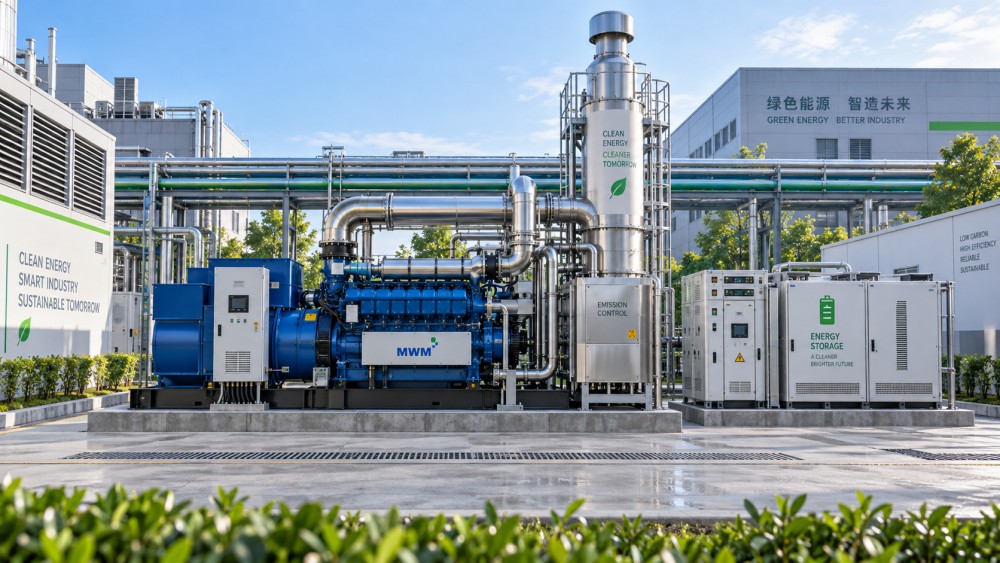
The better engineering question is therefore: which pollutants are regulated at this site, under this operating classification, and can the proposed machine control them across its real load range? Compliance demonstrated at a favorable test condition is not the same as dependable compliance during a hot day, a low-load night shift, or a prolonged grid outage.
Carbon rules change lifecycle economics, not just fuel preference
Local air-quality rules tend to influence the exhaust system and permit strategy. Carbon-related rules influence the wider investment case. They can affect fuel purchasing, reporting obligations, access to financing, customer procurement requirements, and the residual value of long-lived thermal assets. That does not mean every fossil-fueled generator is immediately uneconomic. It does mean that a project based only on initial capital cost is increasingly incomplete.
An industrial facility requiring resilient power may still need an engine generator because batteries alone cannot economically cover every outage duration or process risk. But a sensible design may reduce the generator’s annual runtime by pairing it with battery energy storage, onsite solar, demand controls, or a microgrid controller. In that arrangement, the generator is reserved for high-value, long-duration, or black-start duty rather than handling every short disturbance or evening peak.
That distinction changes the emissions picture. Fewer operating hours may reduce fuel use and local emissions, but it can also affect whether the engine remains adequately exercised and whether aftertreatment reaches effective operating temperature during test periods. Hybridization is not simply “put a battery next to a genset.” The dispatch logic must protect resilience while respecting the technical limits of both assets.
Fuel regulations can quietly decide the project
Fuel is often treated as a procurement matter after equipment selection. In emissions-sensitive projects, that sequence is backward. Fuel sulfur content, gas quality, biofuel compatibility, storage duration, delivery reliability, and local restrictions can all affect the equipment configuration.
A liquid-fuel generator designed around a particular fuel specification may require confirmation before a site switches to renewable diesel, biodiesel blends, synthetic fuels, or another alternative. Compatibility is not only about whether the engine can run. Seals, filtration, cold-flow properties, storage stability, warranty conditions, injection equipment, and exhaust emissions behavior should all be reviewed with the manufacturer and the authority having jurisdiction where relevant.
Gas-fired assets need similar discipline. Pipeline gas, landfill gas, biogas, hydrogen blends, and site-produced gases have different compositions and contaminants. A gas treatment system can be as decisive as the generator package itself. If the fuel quality is variable, engine tuning margins and catalyst performance become operational concerns rather than commissioning details.
Controls and monitoring are now part of the compliance package
Modern emissions compliance is not achieved by hardware alone. The control system determines how the unit starts, ramps, accepts load, manages air and fuel, protects catalysts, records runtime, and responds to abnormal conditions. In grid-connected plants, it may also coordinate export limitation, battery dispatch, renewable curtailment, and demand response.
This creates an important procurement issue: the generator controller, switchgear, emissions equipment, energy-management system, and remote monitoring platform must exchange meaningful data. A project with excellent individual components can still struggle if runtime records are incomplete, alarms are not properly prioritized, or the control logic permits prolonged low-load operation that harms emissions performance.
For some installations, continuous emissions monitoring may be required; for others, periodic testing, maintenance records, fuel documentation, or runtime logs may be the main evidence of compliance. The exact obligation depends on local law, permit conditions, equipment size, fuel, and operating category. It should be verified early rather than inferred from a supplier’s standard package.
A practical comparison framework
When several generation options appear technically viable, compare them against the actual compliance burden rather than using a generic “green versus conventional” ranking.
Do not design for the permit alone
A narrow compliance approach can produce a technically legal but fragile asset. If a project is designed exactly to the current threshold, with no margin for changed duty, hotter ambient conditions, fuel variation, or policy tightening, the owner may inherit a difficult operating constraint. Some margin is prudent, though the amount should be justified economically rather than added blindly.
The same applies to “future-ready” claims. Equipment advertised as hydrogen-ready, carbon-ready, or grid-ready should be examined through specific questions: ready at what blend level or operating condition; with what changes to controls and auxiliaries; under which warranty terms; and under what local approval route? A future pathway is useful only if the site can realistically access the fuel, infrastructure, and permissions it requires.
For global projects, there is an additional complication: standards, grid codes, local pollution limits, and enforcement practices differ. A configuration accepted in one market cannot be assumed to transfer cleanly to another. This is especially relevant for equipment manufacturers serving international tenders, where the electrical package may be standardized but the combustion, exhaust, and documentation package needs regional adaptation.
Selecting equipment with a longer operational horizon
The strongest power-generation selection process brings environmental compliance, electrical performance, and commercial risk into one discussion. Engineers need to assess harmonics, fault levels, synchronizing, motor starts, and islanding behavior. Environmental teams need to assess the permit pathway and reporting obligations. Operations teams need to explain what the asset will actually be asked to do when the grid is stressed. Procurement needs to compare not only purchase price, but service support, spares, fuel logistics, and retrofit exposure.
This is also where reliable industry intelligence has a practical role. GPEGM tracks the intersection of power equipment, digital grid development, drive systems, and changing energy-transition conditions because none of these areas now moves independently. A switchgear decision can determine whether storage can reduce generator runtime. An inverter choice can affect how a microgrid responds during a disturbance. A fuel policy change can reshape the economics of an engine package already under consideration.
Emissions rules do not eliminate the need for dependable generation; they make simplistic equipment decisions harder to defend. The right machine is the one that meets the site’s electrical duty, can document compliance under its real operating pattern, and leaves the owner with credible options if fuel markets, grid conditions, or regulations change. That assessment should be completed before the purchase order, not during the first permit review or the first unplanned outage.
Related News
- How Do Emissions Rules Affect Power Generation Equipment Selection?Sep 25, 2026How do emissions rules affect power generation equipment selection? Explore permits, fuel choices, controls, and lifecycle costs to choose compliant, resilient systems.
- Silent Canopy Diesel Generator Set Selection for Backup Power BuyersSep 12, 2026A selection guide for silent canopy diesel generator set buyers, covering load planning, enclosure design, cooling, noise control, documents, and supplier review.
- Gas Turbine Sizing for Distributed Power: Load Profile and Fuel FactorsAug 26, 2026Gas Turbine sizing for distributed power starts with real load profiles and fuel conditions. Learn how to avoid oversizing, improve efficiency, and select a more reliable fit.
- How to Size a Gas Generator Set for Peak Load and Fuel CostJul 31, 2026Gas generator set sizing done right: learn how to match peak load, motor starting, site derating, and fuel curves to cut operating costs and avoid costly oversizing mistakes.
Related News
- 00
0000-00
How efficiency evolution in automation is reshaping factory energy use - 00
0000-00
When market scanning services are worth the investment - 00
0000-00
Which international infrastructure projects are reshaping Southeast Asia? - 00
0000-00
What drives power pricing in long-term supply contracts? - 00
0000-00
How Do Emissions Rules Affect Power Generation Equipment Selection?