
Power cable procurement is becoming more complex as industrial projects move into 2026 with tighter uptime expectations, more demanding operating environments, and greater scrutiny over lifecycle cost. For buyers, technical evaluators, and finance approvers, the question is no longer limited to whether a cable meets a basic specification. The more relevant issue is whether the selected cable can support long-term reliability, installation efficiency, maintenance planning, and risk control across the full project timeline.
This is especially important in applications exposed to heat, vibration, confined routing paths, or fluctuating outdoor and industrial conditions. In such settings, insulation performance can directly affect service continuity and replacement frequency. That is why procurement teams reviewing cable categories for 2026 are paying closer attention to materials, temperature tolerance, flexibility, and consistency in manufacturing quality. Among the cable types increasingly discussed in these contexts, silicone rubber insulated designs stand out for specific operational advantages that may fit demanding environments better than more conventional options.
Why this topic matters more in 2026
Several procurement pressures are converging. First, many companies are under internal pressure to balance cost discipline with operational resilience. A lower upfront price may appear attractive during budget review, but cable failure can create far higher costs through shutdowns, emergency replacement, labor disruption, or safety-related exposure. Second, project stakeholders are now evaluating component performance in more practical terms: installation speed, compatibility with site conditions, and expected service life in real operating environments.
Third, supply chain evaluation has become stricter. Distributors, EPC participants, manufacturers, and end users often want clearer visibility into production capability, product consistency, and the supplier’s ability to support repeat orders. This matters in cable procurement because even small quality variations can affect stripping performance, routing ease, and long-term insulation stability. For companies operating across multiple facilities or in export-oriented supply chains, the need for dependable and scalable sourcing is likely to remain a priority in 2026.
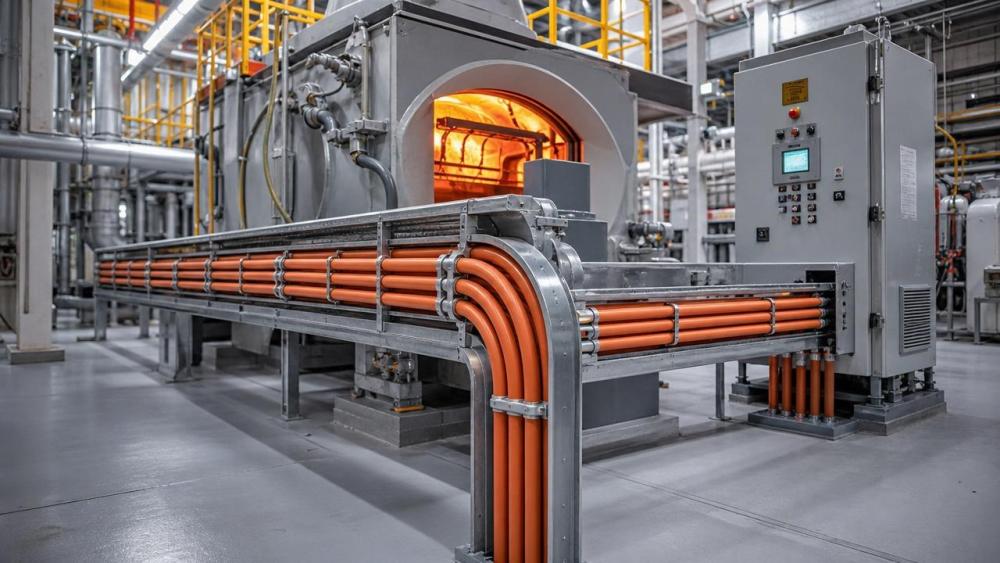
Finally, many industrial sectors are running equipment at higher utilization rates, which raises the importance of cable reliability. Heat-resistant and flexible cable solutions can become more relevant when power distribution lines must perform near furnaces, motors, electrical cabinets, processing lines, or mobile equipment where harsh mechanical or thermal conditions are common.
What procurement teams should examine beyond price
A disciplined cable procurement process in 2026 should move beyond unit pricing and compare total value across several decision factors.
1. Operating temperature suitability
Temperature performance is often one of the first reasons a project team considers silicone rubber insulation. In many industrial environments, ambient heat, intermittent thermal spikes, or close proximity to hot machinery can shorten the service life of standard insulation systems. Procurement teams should verify whether the cable is appropriate for the actual operating range, not only for normal conditions but also for peak stress scenarios, startup cycles, and enclosed installations where heat dissipation is limited.
2. Flexibility during installation and operation
Cables routed through compact trays, moving connections, or equipment with tight bending requirements can create installation challenges if stiffness is too high. Better flexibility may reduce installation time and lower the risk of damage during pulling and routing. This factor can also matter for replacement work in existing plants, where technicians must work around legacy layouts and limited access points.
3. Resistance to environmental stress
Industrial procurement teams should assess whether a cable is likely to face moisture, dust, oils, mechanical movement, UV exposure, or chemical contact. The answer may vary by sector. A cable used in heavy processing, utilities, transport support systems, or outdoor installations may require a different risk assessment than one used inside a climate-controlled electrical room. Material selection should reflect the real service environment rather than a generic catalog comparison.
4. Manufacturing consistency and supplier capability
Even technically suitable cable can become a procurement problem if batch consistency is weak or lead times are unstable. Buyers should review the supplier’s production scope, quality control approach, and ability to support long-term commercial cooperation. For large buyers and distributors, this is not only a technical issue but also a planning issue. Stable sourcing helps avoid project delays, uneven field performance, and repeated qualification work.
5. Lifecycle economics
Finance teams increasingly ask whether a higher-specification cable creates value over time. In many cases, the answer depends on reduced failure risk, maintenance intervals, installation labor, and the cost of downtime. Procurement decisions are stronger when technical teams can translate cable selection into operational and financial outcomes rather than treating it as a simple materials line item.
Where silicone rubber insulated cable becomes especially relevant
The practical value of silicone rubber insulation is most visible in environments where thermal endurance and flexibility need to coexist. This may include power connections in industrial plants, electrical installations near heat-generating equipment, specialized machinery, metallurgy-related operations, processing facilities, and other demanding settings where standard insulation may face faster aging.
For procurement and technical review teams comparing materials, Silicone Rubber Insulated Power Cable is typically considered when the application requires stable insulation performance under elevated temperatures, easier routing in restricted spaces, or greater adaptability across varied industrial conditions. It is not automatically the right choice for every project, but in many scenarios it can help align technical reliability with maintenance and installation priorities.
This is one reason suppliers with dedicated wire and cable manufacturing capability are receiving greater attention from B2B buyers. Companies such as Fortune Engineering Electrical Co., Ltd., a large-scale wire and cable enterprise in Liaocheng City, Shandong Province, combine research, design, production, and sales within a specialized cable manufacturing framework. For procurement professionals, that kind of integrated capability may be relevant when evaluating product range depth, production control, and supply continuity across different cable requirements.
Common procurement mistakes to avoid
One common mistake is selecting cable based only on nominal specification matching. A cable may appear compliant on paper while being poorly aligned with real field conditions such as heat concentration, bend frequency, or installation complexity. Another mistake is underestimating the cost of replacement in active industrial environments. If shutdown windows are limited, even a relatively small cable issue can turn into a costly operational event.
Buyers also sometimes treat all suppliers as interchangeable once the basic product category is identified. In practice, production discipline, technical communication, packaging reliability, and order coordination can strongly influence project results. This is particularly true for distributors and agents who need dependable fulfillment and consistent product identity across multiple shipments.
A further risk is failing to involve all stakeholders early enough. Cable purchasing decisions often touch engineering, procurement, operations, maintenance, and finance at the same time. If one department drives the decision without input from the others, the result may be a product that meets budget expectations but creates avoidable operational friction later.
How different decision-makers tend to evaluate the category
Procurement managers usually focus on sourcing reliability, lead times, specification clarity, and comparative value. Their priority is often to ensure that the chosen cable can be purchased at a competitive cost without increasing delivery or quality risk.
Business evaluators tend to look at broader fit: whether the supplier is suitable for long-term cooperation, whether the product line supports future demand, and whether the selection strengthens project execution. For them, cable purchasing is part of supplier strategy, not just material ordering.
Enterprise decision-makers may care more about operational continuity, project accountability, and reputational risk. If cable performance affects production stability or installation quality, the issue reaches leadership level quickly. Finance approvers often ask whether the recommendation is justified in total cost terms. A more robust cable can be easier to approve when technical teams explain its role in reducing maintenance events, installation inefficiency, or replacement exposure.
Distributors, agents, and resellers have an additional concern: marketability. They need products that are technically credible, commercially supportable, and consistently available. In this context, specialized cable categories can offer stronger value when backed by stable manufacturing and clear positioning for industrial use cases.
Practical steps for 2026 sourcing plans
Companies preparing cable sourcing strategies for 2026 can improve decision quality by building a more structured review process. Start with environment mapping: temperature range, exposure conditions, routing constraints, motion requirements, and maintenance accessibility. Then compare cable options against those conditions rather than relying on generalized assumptions.
Next, evaluate suppliers not only by quotation but also by production specialization, communication efficiency, and ability to support repeat orders. Requesting clarity on material selection, application suitability, and manufacturing scope can help reduce ambiguity during technical approval. For large or recurring demand, it may also be useful to assess whether the supplier can support a broader cable portfolio, which can simplify vendor management over time.
Finally, internal alignment matters. Procurement, engineering, and finance teams should use a shared framework that weighs upfront cost against operational impact. This helps prevent last-minute substitutions that appear economical but introduce reliability concerns later in the project cycle.
Conclusion
In 2026, procurement priorities for power cable are likely to center on resilience, application fit, and long-term value rather than basic price comparison alone. For industries operating in heat-intensive or installation-challenging environments, insulation choice deserves careful review because it can influence reliability, labor efficiency, and maintenance outcomes. Silicone rubber insulated cable is relevant precisely because it addresses a set of conditions that many industrial buyers face more often today: thermal stress, routing complexity, and demand for dependable performance over time.
For procurement teams, business evaluators, and supply partners, the most effective decisions will come from matching cable selection to real operating conditions and supplier capability. That approach supports better budgeting, lower lifecycle risk, and stronger confidence in project execution.
Related News
- Scenario planning in supply risk management for global sourcingSep 02, 2026Supply risk management for global sourcing: discover how scenario planning strengthens resilience, protects delivery, and supports smarter sourcing decisions.
- When procurement logistics planning reduces freight costsAug 22, 2026Procurement logistics planning reduces freight costs by improving consolidation, Incoterm choices, lead times, and supplier coordination—unlock lower landed costs and smarter sourcing decisions.
- What to Check in Power Equipment Procurement to Avoid Costly DelaysJul 29, 2026Power equipment procurement mistakes often start before orders are placed. Learn the key checks on specs, lead times, compliance, testing, and suppliers to avoid costly project delays.
- Industrial Bidding Strategies Guide: Reducing Bid Risk and Margin LossJul 21, 2026Industrial bidding strategies guide for reducing bid risk, protecting margins, and improving tender decisions with practical steps on scope, pricing, compliance, and market intelligence.
Related News
- 00
0000-00
How to verify suppliers listed in a power system supplier directory - 00
0000-00
What an intelligence portal for electronics industry should track - 00
0000-00
What to verify before choosing an energy storage system supplier - 00
0000-00
How electrical engineering for factories prevents costly downtime - 00
0000-00
When does a smart grid for buildings reduce peak demand charges?