
Lead times for power equipment are finally easing in parts of the market, giving procurement teams more room to plan projects and control costs. Yet the recovery is far from uniform: critical categories still face supply constraints, volatile pricing, and long delivery risks. For buyers, understanding where lead times are improving—and where bottlenecks remain—is now essential to smarter sourcing decisions.
For procurement professionals, the core question is no longer simply whether supply chains are recovering. It is which categories are normalizing, which still require early commitment, and how sourcing strategies should change by product type. The short answer is that standard, lower-complexity equipment is becoming easier to source, while grid-critical, highly engineered, or material-intensive assets still demand careful planning and supplier engagement.
This matters because delivery timing now affects far more than project schedules. It shapes bid competitiveness, working capital exposure, inventory strategy, contract structure, and even the technical choices a buyer can make. In today’s market, good procurement decisions depend on reading lead-time signals category by category rather than assuming a broad market reset.
What procurement teams really need to know about easing lead times
The search intent behind this topic is practical and decision-driven. Buyers are not looking for abstract commentary on supply chains; they want a usable market read. They need to know where lead times are shortening, where risks remain stubbornly high, and what that means for sourcing, budgeting, and project execution over the next several quarters.
The most important takeaway is that the market has split into two tracks. On one side, some standard electrical products are seeing improved availability as logistics stabilize, demand becomes more predictable, and suppliers regain production rhythm. On the other, strategic categories tied to grid expansion, energy transition, and industrial electrification still face pressure from structural demand and manufacturing constraints.
That split changes how procurement should operate. A buyer who treats all power equipment the same may either overreact and lock in too early for categories that are loosening, or underreact and wait too long for categories that still need long-range planning. The smarter approach is selective urgency: fast decisions where bottlenecks remain, and disciplined competition where supply conditions have improved.
Which power equipment categories are improving first
Lead times are generally easing first in categories with more standardized designs, broader supplier bases, and less dependence on highly specialized components. In many markets, low-voltage distribution products, selected motor control components, standard switchboards, and some commercial or industrial electrical accessories are moving closer to historical norms than they were during the peak disruption period.
Several forces are behind this improvement. Freight reliability has recovered compared with the worst periods of congestion. Some manufacturers expanded capacity or diversified production footprints. Buyers also shifted from panic ordering to more measured purchasing patterns, which reduced double-booking and inflated backlog signals. Together, these changes are helping certain suppliers quote with more confidence and deliver with greater consistency.
However, “easing” does not necessarily mean “easy.” Procurement teams should distinguish between shorter quoted lead times and truly dependable delivery performance. A category may appear healthier on paper, yet still carry risks linked to factory scheduling, engineering approval cycles, regional labor issues, or final-mile logistics. Better availability is helpful, but validation remains essential before changing project assumptions.
Why some categories still have long lead times
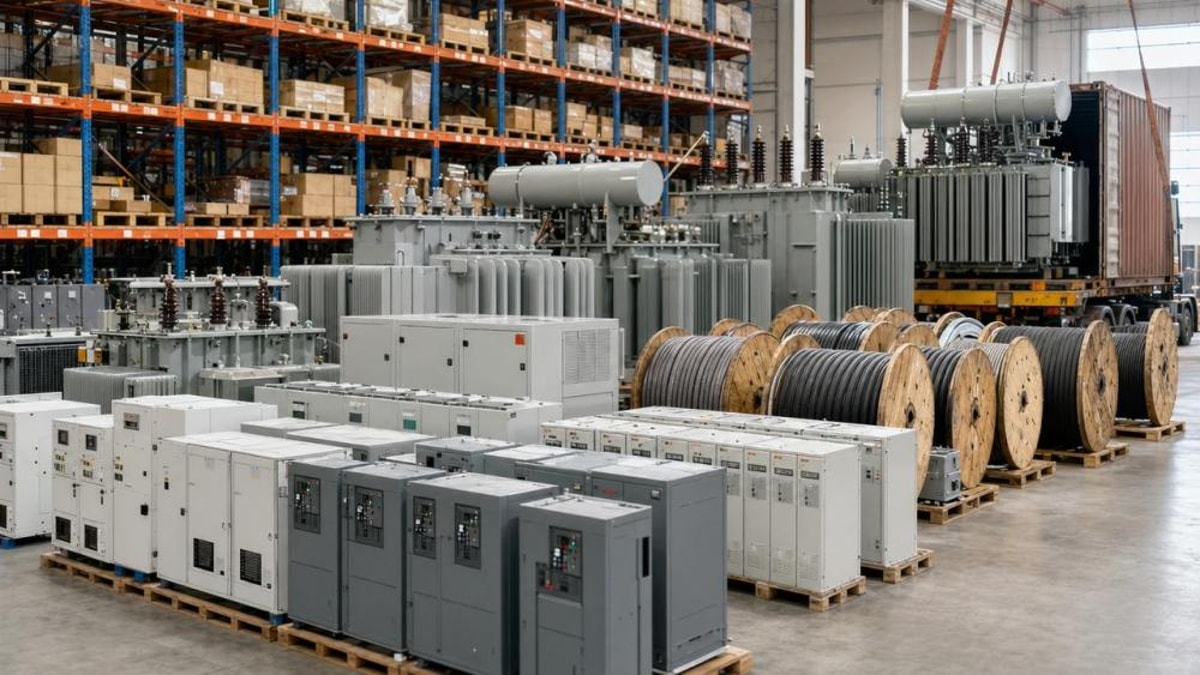
The categories that remain difficult are usually those connected to transmission expansion, utility modernization, renewable integration, and large-scale industrial electrification. Power transformers, high-voltage switchgear, specialized breakers, protective systems, certain cable types, and custom-engineered substation equipment often continue to show extended lead times compared with pre-disruption baselines.
These products are harder to normalize because the challenge is not only logistics. In many cases, demand is structurally high due to grid investment, data center growth, energy storage deployment, manufacturing reshoring, and public infrastructure spending. At the same time, production capacity for highly engineered assets cannot be increased overnight. Skilled labor, testing capability, core materials, and qualification requirements all limit how fast output can expand.
Raw material exposure is another factor. Equipment with heavy copper, aluminum, electrical steel, resin, or semiconductor content remains more vulnerable to cost swings and schedule pressure. Even when a finished product line is technically available, input volatility can complicate pricing validity, production sequencing, or supplier willingness to hold terms for extended periods. This is why long lead times and unstable quotations still often appear together in strategic categories.
How buyers should interpret supplier quotes in the current market
One of the biggest procurement mistakes today is treating a quoted lead time as a fixed market truth. In reality, quoted delivery windows can reflect many things: actual production capacity, sales strategy, backlog smoothing, exposure to component shortages, or a supplier’s confidence in engineering approval timing. Buyers need to read quotes critically, not just compare the headline number.
A useful first step is to ask whether the quoted lead time is based on a standard configuration, a customized specification, or pending technical review. Many delays arise not on the production floor but in submittals, design changes, testing requirements, and customer approvals. If two suppliers quote similar timelines but one is assuming a cleaner technical package, their practical delivery risk may be lower even if the formal lead time is the same.
Procurement teams should also separate factory readiness from shipment readiness. A supplier may say a unit will be completed in a given number of weeks, but actual delivery depends on inspection slots, export documentation, transport availability, and destination constraints. Especially for larger power equipment, the true project impact comes from “usable on-site date,” not just manufacturing completion.
What matters more than the average lead time: category-specific sourcing strategy
When lead times vary sharply by product class, the best strategy is not a single purchasing policy but a segmented one. Critical-path, long-cycle equipment should move into early planning, supplier alignment, and often earlier technical freeze. Less constrained categories can remain under competitive bidding for longer, preserving pricing leverage and reducing the risk of overcommitting inventory or capital too soon.
For example, if a project includes both standard low-voltage assemblies and custom medium- or high-voltage equipment, procurement should not issue all packages under the same timing logic. The long-cycle package may need immediate market engagement, supplier prequalification, and executive review of commercial terms. The lower-risk package may benefit from waiting until demand visibility improves further or more suppliers can participate.
This selective approach also supports better internal communication. Engineering, operations, finance, and project management often hear “lead times are improving” and assume broad relief. Procurement can add value by showing that improvement is real but uneven, and by documenting which categories still justify accelerated decision-making. That clarity helps prevent both complacency and unnecessary urgency.
How to reduce risk when bottlenecks remain
Where supply remains tight, buyers need a risk-control playbook rather than wishful optimism. The first element is earlier market testing. Even if the final specification is not fully complete, preliminary RFIs, capacity checks, and budgetary discussions can reveal whether a category is still under pressure. Early visibility helps teams avoid discovering a supply problem after commercial commitments have already been made downstream.
The second element is technical flexibility. Procurement and engineering should identify where alternate brands, acceptable design substitutions, or modular specification changes can protect schedule without damaging performance. In constrained markets, rigid specifications often reduce optionality and increase dependency on a narrow supplier pool. Controlled flexibility can shorten lead times and improve negotiating leverage.
The third element is contract design. For critical power equipment, buyers should review escalation clauses, validity periods, milestone payment structures, cancellation terms, and liquidated damages with extra care. In categories still facing volatility, a contract that looks cheaper upfront may carry hidden schedule or pricing exposure. Total procurement risk is defined by commercial structure as much as by unit price.
Budgeting and pricing: easing lead times do not guarantee lower costs
Procurement teams should avoid assuming that better delivery conditions automatically translate into lower prices. In some categories, lead times improve before pricing softens. Suppliers may still be carrying high-cost inventory, labor inflation, or expensive material contracts signed during tighter periods. In strategic equipment classes, steady demand can also keep margins firmer even as scheduling becomes less chaotic.
This is especially important during tendering and project budgeting. If a team interprets shorter lead times as proof of an oversupplied market, it may build unrealistic savings assumptions into bids or capital requests. A more reliable approach is to track three indicators separately: delivery timing, price trend, and quotation validity. These do not always move in the same direction, and each affects procurement decisions differently.
For buyers, the practical implication is clear: use improved lead times to regain planning flexibility, not to assume a universal buyer’s market. Where competition has genuinely returned, procurement should press for better terms. Where constraints remain, the focus should shift from headline price to supply assurance, milestone reliability, and cost-of-delay avoidance.
A practical checklist for procurement teams buying power equipment now
First, classify every major item by supply risk rather than by spend alone. High-value items matter, but low-volume components can also delay an entire energization plan if they are scarce. A category-based risk map gives better guidance than a simple cost ranking when market conditions are uneven.
Second, verify market conditions directly with multiple suppliers. Do not rely only on last quarter’s assumptions or broad industry headlines. Ask for current production slots, material constraints, pricing validity, and historical on-time performance. Market recovery can differ by region, voltage class, customization level, and end-use sector.
Third, align internal decision speed with external market reality. If engineering approvals take eight weeks but supplier slots are filling now, the issue is not only supplier capacity but internal responsiveness. Strong procurement performance today depends on compressing internal lag where external lead times are still unforgiving.
Fourth, build contingency into delivery planning. For strategic equipment, consider backup sources, staged shipments, temporary solutions, or phased commissioning options. Contingency planning is not a sign of pessimism; it is a rational response to a market where improvement is real but incomplete.
Finally, keep updating the sourcing strategy. The power equipment market is not static, and category conditions may change quickly as capacity expands, demand shifts, or policy-driven investment accelerates. The most effective procurement organizations are not those with a single strong forecast, but those with a disciplined process for revising assumptions before risks become project delays.
Conclusion: smarter sourcing depends on knowing where relief is real
Lead times for power equipment are easing, and that is good news for procurement teams. But the improvement is selective, not universal. Standardized and lower-complexity categories are generally becoming easier to source, while grid-critical, customized, and material-intensive assets still require early action and tighter risk management.
For buyers, the opportunity is not just to celebrate a recovering market but to respond more intelligently to it. That means segmenting categories, validating supplier claims, protecting schedules through contract and specification choices, and avoiding broad assumptions that no longer fit a divided market. Procurement value now comes from precision, not from a one-size-fits-all strategy.
In practical terms, the winning mindset is simple: treat easing lead times as a chance to improve planning discipline, not to relax it. Teams that understand where supply pressure is truly fading—and where it is not—will make better sourcing decisions, control risk more effectively, and deliver stronger project outcomes in a still-uneven global market.
Related News
- Power Industry Supply Risks to Watch Before Signing New ContractsMay 05, 2026Power industry buyers: learn the key supply risks to review before signing new contracts, from price volatility to compliance and lead times, so you can protect margins and source with confidence.
- High-Voltage Transmission Projects: Where Delays Usually StartMay 05, 2026High-voltage transmission projects often face delays long before construction begins. Discover the early risk triggers and practical controls that keep schedules on track.
- Wide-bandgap semiconductors are improving fast, but supply is unevenApr 30, 2026Wide-bandgap semiconductors are advancing rapidly, but supply remains uneven. Discover where demand is rising, what sourcing risks matter, and how distributors can win more projects.
- Power equipment lead times are easing, but not for every categoryApr 30, 2026Power equipment lead times are easing in some categories, but critical assets still face delays. Learn where supply is improving, where risks remain, and how buyers can source smarter.
Related News
- 00
0000-00
Smart Grid Technology Changes That Are Improving Grid Control - 00
0000-00
Electrical Engineering Solutions That Fit Complex Site Conditions - 00
0000-00
Green Energy Technology Trends Shaping New Investment Plans - 00
0000-00
Industrial Bidding Mistakes That Can Delay Project Approval - 00
0000-00
Industrial Infrastructure Costs Are Shifting in Key Project Areas