
Wide-bandgap semiconductors are advancing at remarkable speed, reshaping power conversion, grid efficiency, and industrial drive performance. Yet for distributors, agents, and channel partners, supply remains uneven across regions, product lines, and application markets. Understanding where demand is accelerating—and where sourcing risks persist—is becoming essential to capturing margin, securing projects, and building resilient portfolios in the fast-evolving global power equipment value chain.
Why are wide-bandgap semiconductors attracting so much attention now?
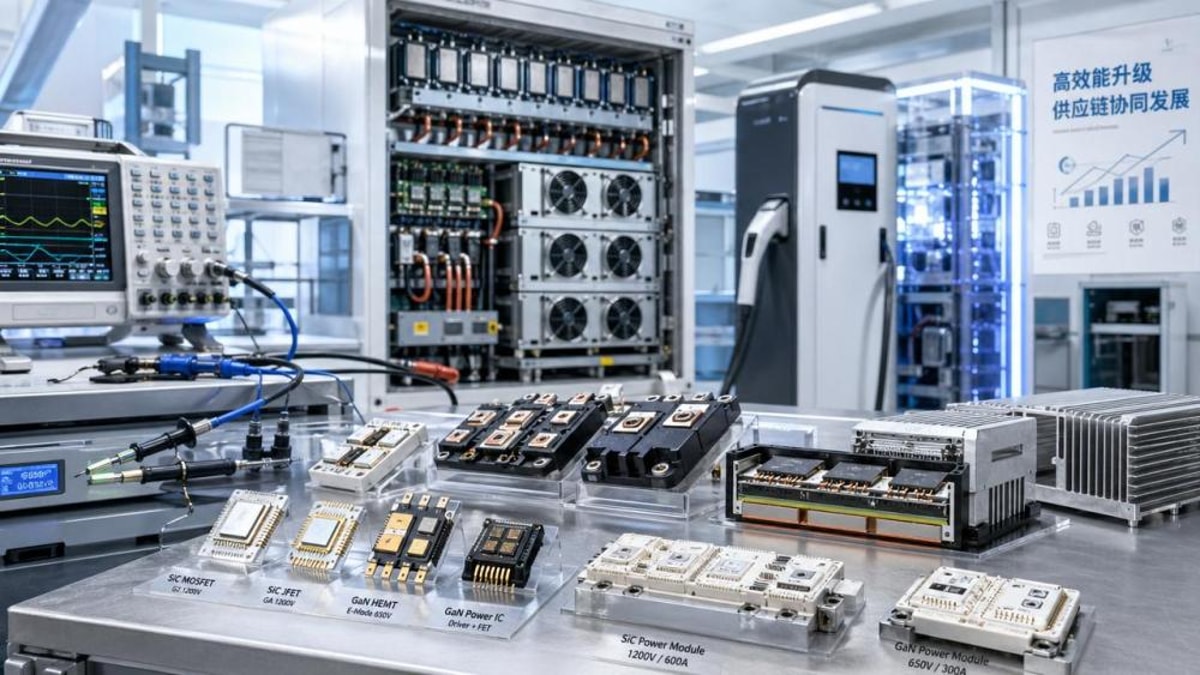
The short answer is performance. Wide-bandgap semiconductors, especially silicon carbide (SiC) and gallium nitride (GaN), can switch faster, tolerate higher temperatures, and reduce energy losses compared with conventional silicon devices. In practical terms, that means smaller converters, lighter power systems, better thermal efficiency, and improved performance in demanding applications such as EV charging, renewable inverters, industrial drives, data centers, rail systems, and grid-connected power equipment.
For distributors and agents, the growing interest is not just a technology story. It is a channel opportunity. OEMs, EPC contractors, system integrators, and maintenance providers increasingly want components and subsystems that improve efficiency targets, power density, and lifecycle economics. As energy transition projects expand, wide-bandgap semiconductors are moving from pilot-stage curiosity to procurement-level demand.
Another reason attention is rising is policy pressure. Carbon reduction goals, grid modernization programs, and industrial electrification are forcing buyers to re-evaluate power electronics. When switching losses, cooling system size, and efficiency gains directly affect total cost of ownership, wide-bandgap semiconductors become commercially relevant rather than merely technically impressive.
What makes this trend especially important across the power value chain?
The impact reaches multiple layers of the market. Component makers benefit from higher-value product categories. Module suppliers gain access to premium design wins. Equipment manufacturers can improve system performance. Channel partners can differentiate through technical support, sourcing reliability, and application matching.
- Higher efficiency supports decarbonization and compliance goals.
- Smaller magnetic and cooling systems can reduce equipment footprint.
- Faster switching enables better power density in modern converters.
- Premium applications often allow stronger margins for specialized distributors.
Why does GPEGM-style market intelligence matter here?
In a market where technical progress is rapid but supply is uneven, intelligence becomes a commercial tool. Buyers need more than datasheets. They need visibility into regional demand, policy shifts, lead-time risks, packaging changes, qualification cycles, and application adoption rates. For channel partners serving energy distribution, industrial automation, and motion drive markets, this kind of intelligence helps connect technology trends with practical sales decisions.
Where is demand for wide-bandgap semiconductors growing fastest, and where is supply still uneven?
Demand growth is strongest where efficiency and thermal performance create direct project value. Electric mobility remains a major driver, but it is far from the only one. Solar inverters, battery storage systems, fast chargers, servo systems, UPS platforms, smart substations, and high-efficiency motor drives are all pushing adoption. In many of these segments, wide-bandgap semiconductors are no longer optional for premium designs.
Supply, however, is not developing evenly. The market may look global on the surface, but wafer capacity, packaging capability, design ecosystem maturity, and local inventory depth vary significantly by region. Some markets have ready access to standard SiC MOSFETs and modules, while others struggle with long lead times for automotive-grade or industrial-qualified parts. GaN may be available in consumer and compact power applications, yet still face qualification barriers in conservative industrial sectors.
For distributors, the mismatch between demand acceleration and supply readiness creates both risk and opportunity. Those who understand which product families are constrained, and which application segments are likely to accept alternates, can protect delivery performance and preserve customer trust.
Which sectors are pulling hardest on channel inventory?
Not all sectors create the same pressure. High-growth applications often absorb supply first because they offer strategic volume or higher-value design wins. That can leave smaller industrial buyers facing tighter availability, even when overall market output appears to be improving.
What does “uneven supply” really mean in practice?
It may mean one package is available but another is not. It may mean bare die capacity is improving while qualified modules remain constrained. It may mean one region has inventory for standard industrial parts, but not for high-voltage, high-current designs. It may also mean engineering support is concentrated around a handful of vendors, making substitution harder than buyers expect. In short, the technology may be advancing fast, but commercial readiness remains segmented.
How should distributors, agents, and channel partners evaluate the market beyond headline growth?
A common mistake is to read adoption news and assume all wide-bandgap semiconductors will sell equally well. In reality, the market is application-driven. Success depends on matching voltage class, package type, reliability expectation, thermal design demands, and certification pathway with the customer’s use case. A channel partner who only stocks “trending” parts without segment discipline may end up with slow-moving inventory.
Distributors should also distinguish between evaluation interest and production demand. Engineering teams may test many SiC or GaN options, but procurement conversion depends on cost targets, redesign timelines, gate-driver compatibility, and field reliability evidence. The sales cycle is often longer than early enthusiasm suggests.
That is why commercial intelligence and technical qualification must work together. The most effective channel strategies combine application mapping, vendor diversification, and account prioritization rather than relying on broad market optimism alone.
What key indicators should you track before expanding a portfolio?
A disciplined review framework helps avoid both underinvestment and overexposure. Instead of asking only whether wide-bandgap semiconductors are growing, ask where they are becoming specification-critical and where they are still optional.
- Design-in momentum: Are customers moving from testing to approved platform adoption?
- Supply continuity: Can your vendors support both sample phase and scaled delivery?
- Technical support load: Do customers require gate-driver, thermal, or EMI guidance?
- Regional policy drivers: Are local efficiency or electrification programs accelerating investment?
- Competitive density: Are you competing on price, availability, engineering support, or bundled value?
Why is application segmentation more valuable than general market size?
Because different customers buy for different reasons. One industrial drive maker may seek lower switching loss to improve efficiency class, while a renewable inverter maker values higher switching frequency to shrink passive components. A railway supplier may focus on thermal ruggedness and lifecycle reliability. The more precisely a distributor understands these drivers, the easier it becomes to recommend the right wide-bandgap semiconductors and avoid wasted quotation cycles.
What are the biggest sourcing and commercialization risks in wide-bandgap semiconductors?
The first risk is assuming that technical superiority automatically guarantees commercial success. Better switching behavior does not eliminate qualification delays, firmware changes, thermal redesign, or customer concerns about long-term reliability. In many industrial accounts, adoption is gated by validation burden as much as by component availability.
The second risk is overconcentration. Relying on a single source for wide-bandgap semiconductors can expose channel partners to allocation changes, packaging shortages, or sudden lead-time expansion. Even when a supplier is strong, channel resilience often depends on having approved alternates, clear lifecycle visibility, and transparent communication with customers about realistic delivery windows.
The third risk is mismatch between promised and usable inventory. Some parts may be in stock but not suitable for the target gate-driver design, enclosure temperature, qualification standard, or certification timeline. Commercially, that means not every available part is truly available for your project.
Which common misconceptions should channel partners avoid?
- “SiC and GaN are interchangeable.” They are not; each fits different power levels, frequencies, and application economics.
- “Faster growth means easier selling.” Rapid growth often comes with more technical questions and longer qualification cycles.
- “Any efficiency gain justifies conversion.” Buyers still measure BOM cost, redesign effort, and serviceability.
- “If wafers expand, supply problems disappear.” Packaging, testing, modules, and certifications can remain bottlenecks.
How can channel partners reduce these risks?
Use a layered strategy: qualify more than one source where possible, monitor vendor roadmaps, keep close contact with end-use sectors that influence allocation, and support customers with realistic migration planning. In many cases, value lies not only in providing wide-bandgap semiconductors, but in helping customers decide when adoption is justified and when mature silicon remains the better fit.
How can buyers decide between SiC, GaN, and advanced silicon options?
This is one of the most practical questions in the market. The answer depends on voltage, switching frequency, thermal limits, system size goals, and cost sensitivity. SiC has become especially strong in high-voltage, high-power applications such as traction, charging infrastructure, utility-scale inverters, and industrial power conversion. GaN often shines in high-frequency, compact designs where efficiency and miniaturization matter. Advanced silicon still remains competitive in many cost-sensitive and lower-performance environments.
For distributors, the decision is less about declaring one winner and more about building an application map. If your customer base is concentrated in grid equipment, large motor drives, renewable conversion, or demanding power infrastructure, SiC may deserve stronger portfolio emphasis. If your accounts include compact power supplies, edge electronics, or fast-switching converters, GaN may offer better channel upside.
The real commercial advantage comes from being able to explain trade-offs clearly. Buyers want to know not only what performs best in theory, but what is available, supportable, and economically credible for their product roadmap.
What quick comparison framework can support a first-level decision?
When is “waiting” the right choice?
If the customer lacks engineering bandwidth, cannot validate thermal redesigns, or serves a market that does not reward efficiency gains with higher pricing or compliance benefits, immediate migration may not be justified. A smart distributor does not push wide-bandgap semiconductors into every project. Instead, they identify where the technology meaningfully improves project economics, performance, or competitive differentiation.
What should you confirm first before quoting, stocking, or building partnerships around wide-bandgap semiconductors?
Before expanding commitments, clarify the customer’s real adoption stage. Are they researching, prototyping, redesigning, or entering serial production? This affects inventory planning, support intensity, and vendor selection. Wide-bandgap semiconductors can generate strong opportunities, but the wrong timing can tie up capital and technical resources.
Next, confirm the full system context. Device selection should be linked to gate-driver compatibility, thermal constraints, switching targets, compliance requirements, expected service life, and regional certification needs. A component-level quotation without system-level understanding often leads to delays later in the sales cycle.
Finally, assess partnership quality. In this market, the best suppliers are not always the ones with the loudest claims. Look for roadmap transparency, application support depth, packaging consistency, failure analysis responsiveness, and the ability to support both current projects and future scale-up.
Which questions should channel partners bring into the next customer or supplier discussion?
- What exact application and power range is driving interest in wide-bandgap semiconductors?
- Is the project in evaluation, pilot production, or volume manufacturing?
- Which performance metric matters most: efficiency, heat, size, switching speed, or lifecycle cost?
- What qualification standards or regional approvals must be met?
- What lead-time tolerance and alternate-source strategy are acceptable?
- How much engineering support is required before a purchasing decision can be made?
What is the practical takeaway for distributors and agents?
Wide-bandgap semiconductors are improving fast, but channel success will depend less on chasing headlines and more on disciplined execution. The strongest opportunities lie where market intelligence, application understanding, and supply-chain realism come together. If you need to confirm the right product direction, sourcing cycle, technical fit, pricing path, or cooperation model, start by aligning on application, qualification stage, forecast visibility, and support expectations before moving into quotes or stock commitments.
Related News
- Power Industry Supply Risks to Watch Before Signing New ContractsMay 05, 2026Power industry buyers: learn the key supply risks to review before signing new contracts, from price volatility to compliance and lead times, so you can protect margins and source with confidence.
- High-Voltage Transmission Projects: Where Delays Usually StartMay 05, 2026High-voltage transmission projects often face delays long before construction begins. Discover the early risk triggers and practical controls that keep schedules on track.
- Wide-bandgap semiconductors are improving fast, but supply is unevenApr 30, 2026Wide-bandgap semiconductors are advancing rapidly, but supply remains uneven. Discover where demand is rising, what sourcing risks matter, and how distributors can win more projects.
- Power equipment lead times are easing, but not for every categoryApr 30, 2026Power equipment lead times are easing in some categories, but critical assets still face delays. Learn where supply is improving, where risks remain, and how buyers can source smarter.
Related News
- 00
0000-00
Smart Grid Technology Changes That Are Improving Grid Control - 00
0000-00
Electrical Engineering Solutions That Fit Complex Site Conditions - 00
0000-00
Green Energy Technology Trends Shaping New Investment Plans - 00
0000-00
Industrial Bidding Mistakes That Can Delay Project Approval - 00
0000-00
Industrial Infrastructure Costs Are Shifting in Key Project Areas