
Industrial automation projects can deliver major gains, but when integration is rushed, costs often escalate far beyond initial expectations. For business decision-makers, hidden expenses in system compatibility, downtime, rework, and supplier coordination can quickly erode ROI. Understanding why industrial automation costs rise so fast is essential to building smarter investment strategies, reducing operational risk, and securing long-term value in an increasingly digital and competitive market.
Why rushed industrial automation integration becomes expensive so quickly
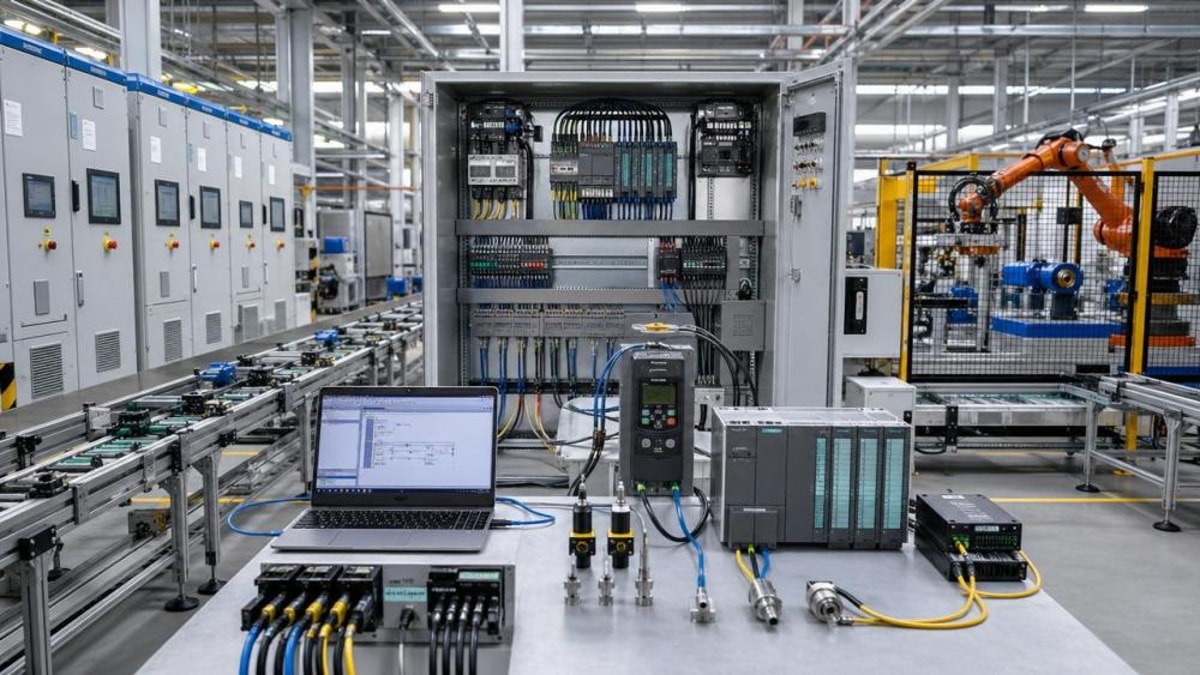
In most sectors, industrial automation is no longer a single equipment purchase. It is a system-level change that links drives, switchgear, sensors, PLCs, SCADA layers, power quality controls, safety logic, data interfaces, and maintenance workflows. When integration starts before architecture, interface mapping, and site constraints are fully defined, costs rise in 3 familiar stages: specification drift, installation conflict, and delayed stabilization.
For enterprise decision-makers, the problem is rarely the listed price of hardware alone. The true exposure often appears in engineering change orders, 2–6 weeks of schedule slippage, repeated commissioning visits, and production interruptions during cutover. In facilities with continuous or near-continuous operation, even a short downtime window of 8–24 hours can outweigh the savings expected from a lower initial bid.
Rushed industrial automation projects also create supplier alignment problems. One vendor may define fieldbus readiness differently from another. A motor drive supplier may assume clean upstream power, while the panel integrator expects additional harmonic mitigation. If these assumptions are not validated early, the project team pays later in retrofit parts, redesign labor, and acceptance delays.
This is where market intelligence matters. GPEGM tracks not only industrial automation trends, but also the wider power and electrical grid context behind them: copper and aluminum price shifts, carbon policy direction, efficiency requirements, high-voltage infrastructure demand, and the digital integration path of power devices. For executives, this broader view helps separate urgent needs from rushed decisions.
The 4 cost drivers leaders often underestimate
- Interface complexity: legacy equipment may require protocol conversion, additional I/O mapping, or custom gateway logic.
- Power system readiness: industrial automation performance can suffer if switchboards, protection coordination, grounding, or power quality are not reviewed.
- Commissioning depth: basic startup may take 3–5 days, but stable tuning across process, drive, and safety layers can take 2–4 weeks.
- Organizational readiness: operators, maintenance teams, IT, and procurement often work on different timelines, creating expensive handoff gaps.
A disciplined industrial automation program treats integration as an operational and electrical transformation, not just a procurement event. That distinction is often the difference between a controlled rollout and a budget that expands every week.
Where hidden industrial automation costs usually appear
Decision-makers often ask why the approved budget looked reasonable at the RFQ stage but became difficult to control during execution. The answer is that hidden industrial automation costs are distributed across engineering, operations, compliance, and energy infrastructure. They do not always appear on one supplier quotation, which makes them easy to miss during fast approvals.
The table below summarizes common cost categories seen across manufacturing, utilities, logistics, process industries, and infrastructure projects. These are not fixed values, but recurring cost sources that should be evaluated before final vendor selection and integration scheduling.
The key lesson is that industrial automation cost growth is usually cumulative, not dramatic at a single moment. A few extra engineering hours, a postponed startup, an extra site visit, and a last-minute parts change can turn a manageable project into a poor capital allocation decision.
GPEGM is valuable here because industrial automation does not operate in isolation from energy and drive-system economics. If material prices, motor efficiency trends, inverter technology, or carbon-related compliance expectations are shifting, a decision made today may carry different cost implications 6–12 months later.
A practical warning sign checklist
- The project has no complete I/O list, yet procurement has already started.
- The shutdown window is fixed, but SAT procedures and rollback plans are still incomplete.
- Energy supply assumptions have not been checked against actual load behavior and harmonics risk.
- There is no single owner for integration responsibility across controls, power, and commissioning.
If two or more of these signs are present, the probability of avoidable industrial automation cost escalation is already high.
How to evaluate industrial automation options before budget approval
The best way to control industrial automation cost is to improve pre-approval evaluation. Executives do not need to review every wiring diagram, but they do need a structured investment filter. In most cross-industry projects, 5 decision dimensions matter most: integration fit, electrical readiness, lifecycle support, compliance alignment, and implementation timeline.
A low quoted price may still be attractive if the site is standardized, the line is greenfield, and the vendor supports the required communication stack. But if the project involves legacy assets, medium-voltage interfaces, motion control dependencies, or staged retrofits over 2–3 phases, evaluation must go beyond capital expenditure.
The following comparison framework can help decision-makers ask better questions before selecting an industrial automation pathway. It is especially useful when comparing rapid retrofit programs against more structured phased integration strategies.
The comparison shows why industrial automation decisions should be framed in lifecycle terms. A phased plan may seem slower, but it often protects ROI by reducing rework, simplifying acceptance, and preserving production continuity.
Three executive questions to ask before signing
1. What is the real integration boundary?
Ask whether the vendor scope includes only equipment supply, or also protocol mapping, power system review, FAT support, SAT support, operator training, and post-start optimization during the first 30–90 days.
2. What assumptions could trigger change orders?
Every industrial automation proposal relies on assumptions about existing panels, cable routes, communication stability, environmental conditions, and load characteristics. These assumptions must be visible before contract award.
3. How will value be measured after startup?
Define 4–6 operational checkpoints such as availability, alarm frequency, response time, energy efficiency trend, maintenance intervention rate, and restart stability. Without measurable post-start targets, cost discussions become subjective.
Implementation planning: what lowers risk across industries
A better industrial automation outcome usually comes from disciplined sequencing rather than aggressive acceleration. Across utilities, manufacturing lines, processing plants, building systems, and infrastructure assets, strong implementation plans follow a similar pattern: assess, design, validate, deploy, stabilize. The exact timing changes, but the logic does not.
For many projects, a realistic path includes 4 implementation steps over 6–16 weeks, depending on asset age, site access, and software depth. Greenfield installations can move faster. Brownfield upgrades with mixed vendors and old electrical documentation often need more survey and validation time before procurement locks in.
Industrial automation also depends on power continuity and electrical coordination more than many teams first assume. A drive system may be well specified, but if protective settings, cable conditions, or upstream switchgear logic are not aligned, the startup phase becomes unstable. That is why decision-makers benefit from intelligence that bridges automation with grid-side and power-equipment realities.
A typical low-risk implementation sequence
- Weeks 1–2: site audit, document review, asset tagging, protocol inventory, and electrical readiness screening.
- Weeks 2–5: architecture finalization, bill of materials freeze, control logic review, and compliance checkpoint planning.
- Weeks 5–10: panel build or software preparation, FAT preparation, operator training plan, and shutdown scheduling.
- Weeks 10–16: installation, SAT, tuning, staged handover, and performance monitoring with documented punch-list closure.
This sequence does not guarantee a perfect project, but it sharply reduces the risk of expensive surprises. It also creates clearer ownership between procurement, engineering, operations, and service teams.
Standards, compliance, and acceptance points worth checking
Depending on region and asset class, industrial automation projects may need to consider common frameworks such as IEC-related electrical practices, functional safety concepts, EMC requirements, energy efficiency obligations, and local grid interconnection expectations. The exact list varies, but compliance review should happen before equipment release, not after site delivery.
A practical acceptance plan usually covers at least 6 items: electrical integrity, communication integrity, safety interlocks, alarm logic, performance under normal load, and restart behavior after fault or power disturbance. These checks help prevent disputes over whether the automation system is merely installed or truly operational.
Common misconceptions about industrial automation cost and ROI
One common misconception is that faster integration always means faster payback. In reality, industrial automation ROI depends on stability after commissioning. If a line runs at reduced confidence for the first 60–120 days, the hidden cost of manual intervention, delayed throughput, and operator caution can materially weaken expected gains.
Another misconception is that automation complexity is mainly a software issue. For many facilities, the larger challenge lies in the electrical and mechanical environment around the control system. Motor behavior, variable load patterns, ambient conditions, grounding quality, and panel heat management can all influence whether performance remains stable after deployment.
There is also a persistent belief that one vendor can always absorb integration risk. In practice, industrial automation responsibility is often distributed. OEMs, drive suppliers, system integrators, panel builders, power specialists, and the plant owner each control different parts of the outcome. Without clear interface responsibility, recovery becomes slow and expensive.
FAQ for decision-makers
How long should an industrial automation upgrade take?
For straightforward standardized systems, planning and deployment may fit within 4–8 weeks. For brownfield projects with legacy controls, multiple vendors, or power-system constraints, 8–16 weeks is often more realistic. The most reliable schedule is based on interface complexity, not urgency alone.
What should procurement verify before comparing bids?
At minimum, verify 5 items: scope boundary, communication compatibility, electrical assumptions, commissioning support, and warranty responsibility. If these are unclear, the lowest industrial automation bid may become the highest total project cost.
When is phased implementation better than a single shutdown approach?
Phased implementation is usually better when the plant cannot tolerate long downtime, when documentation quality is limited, or when new automation must coexist with older assets for 3–12 months. It reduces operational shock and helps preserve business continuity.
Can energy-market changes affect industrial automation decisions?
Yes. Material costs, motor efficiency expectations, inverter technology shifts, and carbon-related policy direction can all affect lifecycle economics. That is why GPEGM’s intelligence approach is useful: it connects industrial automation choices with broader power-equipment and energy-transition realities.
Why informed guidance matters before you commit budget
Industrial automation can create measurable value across almost every industry, but only when integration decisions reflect technical fit, electrical context, supplier coordination, and realistic deployment timing. For business leaders, the goal is not simply to automate faster. The goal is to automate without importing hidden cost, operational fragility, or avoidable rework.
GPEGM supports that decision process by combining power equipment intelligence, energy distribution insight, motion drive analysis, and market observation into a more complete decision framework. This is especially relevant when automation projects intersect with efficiency upgrades, distributed power strategies, smart switchgear planning, or international infrastructure bidding.
If your team is evaluating industrial automation investments, you can consult on concrete issues rather than broad promises: interface compatibility, drive and motor selection logic, expected delivery windows, phased implementation options, power quality implications, compliance checkpoints, and quotation comparison criteria across suppliers.
Contact us to discuss your current project scope, target timeline, risk points, and procurement questions. We can help you review system assumptions, compare integration paths, clarify certification and acceptance concerns, and build a more defensible industrial automation plan before hidden costs start to accumulate.
Related News
- Electrical Engineering Solutions That Fit Complex Site ConditionsMay 06, 2026Electrical engineering solutions for complex sites: improve reliability, manage grid and load challenges, and reduce lifecycle risk with smarter, future-ready system decisions.
- Industrial Automation Equipment Upgrades That Reduce DowntimeMay 06, 2026Industrial automation equipment upgrades reduce downtime with smarter drives, condition monitoring, and better controls. Discover practical strategies to improve uptime, reliability, and plant performance.
- Power Electronics Components Failures That Often Start SmallMay 06, 2026Power electronics components often fail from small warning signs like heat, drift, contamination, and weak connections. Learn the early risks, inspection priorities, and prevention steps.
- How Intelligent Power Is Changing Equipment Maintenance PlanningMay 05, 2026Intelligent power is transforming equipment maintenance planning with real-time insights, faster fault prediction, reduced downtime, and smarter service decisions—discover how it boosts reliability and cuts costs.
Related News
- 00
0000-00
Smart Grid Technology Changes That Are Improving Grid Control - 00
0000-00
Electrical Engineering Solutions That Fit Complex Site Conditions - 00
0000-00
Green Energy Technology Trends Shaping New Investment Plans - 00
0000-00
Industrial Bidding Mistakes That Can Delay Project Approval - 00
0000-00
Industrial Infrastructure Costs Are Shifting in Key Project Areas