
In power electronics, failures rarely begin with a dramatic breakdown—they often start with overlooked thermal design gaps that quietly compromise reliability, safety, and product quality. For quality control and safety managers, understanding how heat affects components, insulation, and system stability is essential to preventing costly downtime and compliance risks. This article explores why thermal design deserves earlier attention in every stage of equipment evaluation and risk management.
For most searchers using the keyword power electronics with this topic, the real intent is not academic. They want to understand why products that pass electrical tests still fail in the field, why intermittent faults are so hard to trace, and how thermal design weaknesses create hidden quality and safety exposure long before a visible incident occurs. The practical question is simple: how can teams identify thermal risk earlier and reduce failures before shipment, commissioning, or warranty return?
That concern is especially relevant for quality control personnel and safety managers. They are usually not trying to redesign a converter or select every transistor package themselves. What they need is a reliable way to judge whether thermal design has been treated as a first-order reliability requirement, whether supplier claims are credible, and whether current validation methods are strong enough to catch heat-related failure modes under realistic operating conditions.
The overall judgment is clear: in power electronics, thermal design should be reviewed as a system-level risk topic, not as a late-stage engineering detail. The most useful content for this audience includes early warning signs, common thermal design gaps, inspection and qualification checkpoints, test strategies, supplier assessment questions, and the link between thermal stress, safety, compliance, and lifecycle cost. General explanations of heat transfer matter only when they help better decisions.
Why thermal design gaps become quality and safety problems so early
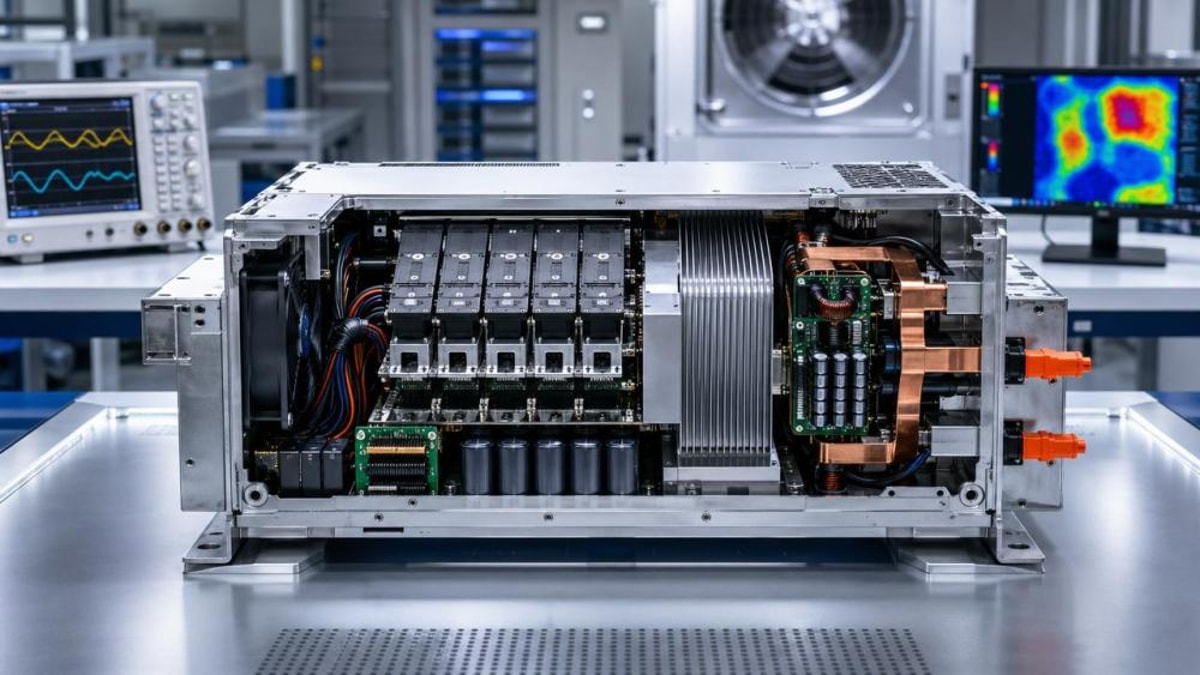
Many power electronics failures begin when temperature rise is accepted as “within limits” without enough attention to real operating variation. A design may survive nominal laboratory conditions, yet fail when ambient temperature rises, airflow degrades, dust accumulates, switching frequency changes, or load cycles become more aggressive. In such cases, the thermal gap is not a single defect. It is a hidden reduction in design margin that gradually erodes reliability.
For quality teams, this matters because thermal stress often appears first as inconsistency rather than catastrophic failure. You may see drift in electrical parameters, unstable output, nuisance trips, shortened capacitor life, solder fatigue, insulation aging, connector discoloration, or repeated service complaints that do not immediately point to overheating. These symptoms can be misclassified as random quality escapes when the underlying cause is actually thermal architecture.
For safety managers, the concern is even broader. Elevated temperatures in power electronics can affect creepage integrity, insulation performance, enclosure hot spots, wiring degradation, and even fire risk in severe cases. Heat also changes how failures propagate. A part that overheats rarely fails in isolation; it can stress surrounding components, compromise protective functions, and turn a manageable fault into a system-level event with compliance implications.
This is why thermal design deserves attention before product release and before site acceptance. Once a heat-related weakness reaches the field, corrective action is expensive and often slow. Thermal failures are tied to environment, use profile, and installation quality, which means they generate more investigation complexity than a straightforward electrical breakdown. Early detection offers the highest return.
What quality control and safety managers should look for first
The first priority is not to ask whether a heat sink exists or whether a simulation report is available. The better question is whether the thermal design assumptions match real-world use. A product may be specified for a broad temperature range, but were tests run at maximum load, worst-case switching conditions, degraded cooling, voltage variation, and realistic enclosure constraints? If the answer is no, then the design margin may be weaker than documentation suggests.
Next, review which components are truly life-limiting under heat. In many power electronics systems, semiconductors attract most of the attention, but electrolytic capacitors, magnetic materials, gate drivers, current sensors, PCB substrates, potting compounds, and connectors are often the parts that determine field reliability. A thermal review that focuses only on junction temperature while ignoring surrounding materials is incomplete from a quality and safety standpoint.
It is also important to verify temperature measurement methods. Surface readings, thermal camera images, internal sensor values, and simulation outputs do not always tell the same story. Emissivity errors, sensor placement mistakes, transient load behavior, and localized hot spots can all produce misleading comfort. Quality teams should ask how temperatures were measured, where the hottest points were identified, and whether data reflects steady-state only or also startup, overload, and cycling conditions.
Another early checkpoint is cooling dependency. If a design depends heavily on forced air, narrow airflow paths, or ideal installation spacing, then field reliability may be vulnerable. Dust, fan degradation, filter blockage, cabinet crowding, and user modification can quickly invalidate laboratory assumptions. A strong thermal design does not merely perform when cooling is perfect; it retains acceptable safety and reliability margin when cooling is partially compromised.
Common thermal design gaps that quietly drive field failures
One common gap is relying on average temperature instead of local hot spots. In high-density power electronics, failure often starts where current crowding, switching loss concentration, or poor board layout creates a small region of severe heating. The system may appear acceptable overall while one solder joint, one busbar interface, or one capacitor terminal ages rapidly. If validation focuses on average enclosure temperature, this risk can be missed.
A second gap is underestimating thermal cycling. Products that operate in renewable energy, motor drives, charging infrastructure, industrial automation, and transportation rarely stay at one stable condition. They ramp, idle, surge, and repeat. These temperature swings strain solder joints, bond wires, substrates, TIM layers, and mechanical fasteners. A design that survives constant-load testing may still fail prematurely if cycling fatigue was not properly considered.
A third gap involves thermal interface materials and assembly variation. On paper, the stack-up may be excellent. In production, inconsistent torque, surface flatness variation, excess or insufficient TIM application, contamination, or gap-pad compression differences can sharply increase thermal resistance. This is where quality control becomes essential. Thermal performance is not only a design matter; it is a manufacturing discipline.
Another frequent weakness is treating protection thresholds as a substitute for thermal design. Overtemperature shutdown is necessary, but it is not a cure for poor heat flow. If protection activates too late, too locally, or too frequently, damage may already be accumulating. Repetitive operation near thermal protection thresholds also reduces user confidence and can create secondary safety concerns, especially in mission-critical or continuously operated systems.
Finally, some teams overlook aging effects. Fans lose efficiency, thermal grease pumps out, dust builds up, ambient conditions shift, and component characteristics change over time. A product that meets thermal targets on day one may no longer meet them after months or years of service. Quality and safety evaluation should therefore examine end-of-life thermal performance, not only beginning-of-life results.
How to evaluate thermal risk more effectively during product qualification
A useful qualification approach starts with worst-case mapping. Identify the harshest credible combinations of ambient temperature, altitude, contamination, enclosure restriction, duty cycle, line variation, and load profile. Then ask whether qualification testing actually included those combinations. If test plans cover only standard nominal scenarios, they may validate marketing claims but not real reliability or safety performance.
Thermal validation should also be linked to failure mode thinking. Instead of only checking if temperatures stay below component ratings, quality teams should ask what happens if a fan slows, a vent clogs, a filter is neglected, a phase becomes unbalanced, or a control algorithm drives unexpected switching behavior. These are realistic paths to thermal stress in power electronics, and they should be represented in FMEA, design review, and qualification logic.
Where possible, combine steady-state testing with transient and cycling tests. Hot spots often emerge during load transitions, start-stop events, regeneration, or short-duration overloads. A design that looks thermally stable after long operation may still face repeated short thermal spikes that accelerate wear. Capturing these conditions improves root-cause visibility and gives quality managers more confidence in lifecycle robustness.
Supplier documentation should be reviewed critically. Thermal simulation models, datasheet derating curves, and component lifetime estimates are useful, but they depend on assumptions. Ask what boundary conditions were used, whether validation included production hardware, and how much margin exists between observed temperatures and rated limits. A narrow margin may be acceptable in theory but weak in practice when production spread and field variability are considered.
Finally, qualification should include manufacturing realism. Test samples built by expert prototype teams may perform better than normal production units. If thermal contact quality, routing discipline, torque control, or material consistency are not replicated in validation builds, qualification data may overstate field performance. Auditing this gap is one of the most valuable actions a quality team can take.
Practical indicators that a thermal issue may already be developing
In service data, repeated intermittent faults are often an early indicator. If alarms increase during warm seasons, at high loads, or in confined installations, thermal stress should be investigated. The same applies when failures cluster after a predictable operating duration rather than immediately at startup. Heat-related degradation often follows time-at-temperature patterns rather than instant malfunction patterns.
Visual evidence also matters. Discoloration near terminals, browned PCB regions, brittle insulation, warped plastic, oil leakage from capacitors, cracked potting, fan dust loading, and uneven material aging can all point to chronic overheating. These signs should be documented systematically because they often reveal thermal pathways that normal electrical tests fail to highlight.
From a process perspective, rising rework rates around power modules, bus connections, cooling assemblies, or sensor placements may indicate thermal sensitivity to assembly variation. If a product becomes highly dependent on technician skill to maintain acceptable temperatures, that is not only a manufacturing problem. It is a sign that the thermal design may lack robustness.
Customer complaints can also contain thermal clues even when users do not describe heat directly. Reports of derating, unexplained shutdown, odor, reduced efficiency, unstable performance after extended use, or failures in specific climates should trigger a thermal review. Quality and safety managers who connect these patterns early can prevent a broad field issue.
How stronger thermal governance improves reliability, safety, and business outcomes
For organizations dealing with power electronics, better thermal governance produces benefits beyond fewer failures. It supports more credible product qualification, cleaner supplier approval, stronger warranty control, and lower investigation cost. It also improves communication between design, manufacturing, quality, and safety teams because thermal risk becomes visible in shared criteria rather than hidden inside engineering assumptions.
From a safety perspective, early thermal review reduces the chance that a minor design weakness turns into a compliance event, site incident, or reputational problem. In regulated sectors and critical infrastructure, that prevention value is substantial. A small investment in better thermal testing, clearer derating rules, and tighter assembly control can prevent costly corrective actions later.
From a quality management angle, thermal discipline helps distinguish true random failure from predictable stress-driven failure. That distinction is important because it changes the corrective action path. Random variation suggests one response; a thermal margin issue requires another. Teams that understand this can act faster, collect better evidence, and avoid superficial fixes.
A practical governance model usually includes five elements: thermal design review at concept stage, defined worst-case operating profiles, production controls for thermal interfaces and cooling assemblies, field feedback analysis linked to thermal symptoms, and periodic reassessment of design margin as components, suppliers, or use cases change. This is not excessive engineering overhead. It is basic reliability protection.
What a good internal checklist should include
For quality control and safety managers, a concise internal checklist can make thermal risk reviews more repeatable. Start with design intent: What are the maximum internal temperatures, hottest components, cooling assumptions, derating rules, and protection strategies? Then move to evidence: Which tests, simulations, and measurements confirm those assumptions under worst-case conditions?
Add manufacturing questions: How are torque, flatness, TIM application, fan installation, and airflow path integrity controlled on the line? What inspection points verify them? Are there thermal-sensitive process changes that require requalification? These questions are especially important when scaling production, changing suppliers, or shifting factories.
Include field reality: What operating environments are most common, and which are most severe? What complaint patterns, return data, or maintenance observations suggest thermal stress? How is this information fed back into design review and supplier management? The best checklists are not static documents; they evolve with actual service evidence.
Finally, confirm accountability. Thermal risk in power electronics often falls between departments because each team sees only part of the problem. A clear review owner, cross-functional signoff, and defined escalation criteria help ensure that thermal concerns are resolved as business-critical reliability issues rather than deferred as engineering details.
Conclusion
Power electronics failures often start quietly, and thermal design gaps are among the most common reasons. For quality control personnel and safety managers, the key lesson is that acceptable electrical function does not guarantee acceptable thermal reliability. Heat affects component life, protection behavior, insulation integrity, production consistency, and field safety long before a dramatic breakdown occurs.
The most effective response is to move thermal review earlier and make it more practical. Focus on real operating conditions, local hot spots, thermal cycling, assembly variation, cooling dependency, and aging. Ask for evidence, not assumptions. When thermal design is treated as a core quality and safety issue, organizations gain fewer failures, stronger compliance confidence, and better long-term performance from every power electronics product they approve, buy, or release.
Related News
- Electrical Engineering Solutions That Fit Complex Site ConditionsMay 06, 2026Electrical engineering solutions for complex sites: improve reliability, manage grid and load challenges, and reduce lifecycle risk with smarter, future-ready system decisions.
- Industrial Automation Equipment Upgrades That Reduce DowntimeMay 06, 2026Industrial automation equipment upgrades reduce downtime with smarter drives, condition monitoring, and better controls. Discover practical strategies to improve uptime, reliability, and plant performance.
- Power Electronics Components Failures That Often Start SmallMay 06, 2026Power electronics components often fail from small warning signs like heat, drift, contamination, and weak connections. Learn the early risks, inspection priorities, and prevention steps.
- How Intelligent Power Is Changing Equipment Maintenance PlanningMay 05, 2026Intelligent power is transforming equipment maintenance planning with real-time insights, faster fault prediction, reduced downtime, and smarter service decisions—discover how it boosts reliability and cuts costs.
Related News
- 00
0000-00
Smart Grid Technology Changes That Are Improving Grid Control - 00
0000-00
Electrical Engineering Solutions That Fit Complex Site Conditions - 00
0000-00
Green Energy Technology Trends Shaping New Investment Plans - 00
0000-00
Industrial Bidding Mistakes That Can Delay Project Approval - 00
0000-00
Industrial Infrastructure Costs Are Shifting in Key Project Areas