
Is a Premium-Efficiency Motor Worth the Higher Cost?
Is a premium-efficiency motor worth the extra cost? In many continuous-duty applications, yes, but the financial case depends on operating hours, load, electricity price, and installation conditions.
For manufacturers, utilities, and facility managers, motor procurement should not stop at nameplate price. Electricity, downtime, maintenance, and replacement timing usually determine the larger economic outcome.
Premium-efficiency motors can reduce energy losses, support decarbonization targets, and improve long-term asset performance. However, they are not automatically the right choice for every intermittent or lightly loaded machine.
The practical question is not whether premium efficiency is technically better. It is whether the additional capital cost produces an acceptable payback and lifecycle return.
This guide explains how to evaluate that decision using operating data, realistic assumptions, efficiency standards, and risk factors relevant to industrial and grid-connected equipment.
Start With the Lifecycle Cost, Not the Motor Purchase Price
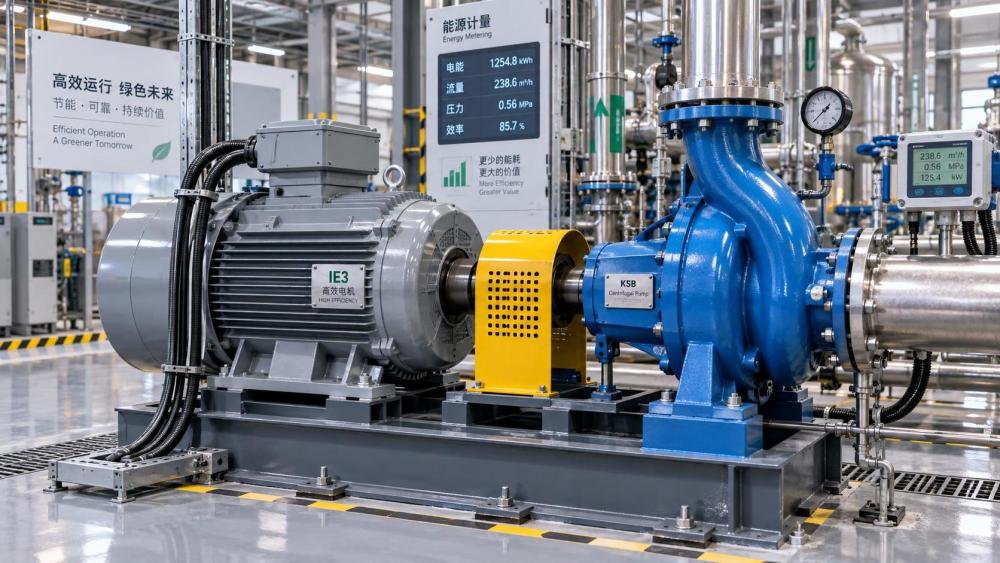
The purchase price difference between a standard and premium-efficiency motor is visible immediately. The much larger cost, however, is the electricity consumed throughout its working life.
For a motor operating thousands of hours annually, energy can represent more than 90 percent of total ownership cost. A modest efficiency improvement can therefore become significant.
Premium-efficiency motors reduce electrical losses in stator windings, rotor conductors, laminations, bearings, and cooling systems. Those reductions lower the kilowatt input required for the same shaft output.
The comparison should use equivalent motors: same rated power, speed, enclosure, duty cycle, voltage, mounting arrangement, and application requirements. Comparing unlike equipment produces misleading savings estimates.
Efficiency differences may appear small on a datasheet. A one or two percentage-point gain becomes meaningful when a large motor runs continuously in a process plant.
For example, a 75 kW motor delivering the same mechanical load with lower losses can avoid several megawatt-hours annually. Local electricity tariffs determine the financial value.
Lifecycle cost also includes maintenance labor, spare inventory, lost production risk, power-quality effects, and expected service life. These factors can favor higher-quality motor designs beyond energy performance.
Decision-makers should ask procurement teams for a total-cost-of-ownership comparison over ten to fifteen years. A low initial quotation may be the more expensive choice overall.
This approach is particularly important when motors are installed in inaccessible locations, critical processes, pumping stations, substations, water systems, or remote energy infrastructure.
How to Calculate the Energy Savings and Simple Payback
A useful calculation begins with actual shaft load rather than rated motor power. Many motors operate well below their nameplate rating, changing both efficiency and savings potential.
Estimate annual energy use by dividing output power by motor efficiency, then multiplying the electrical input by annual operating hours. Repeat the calculation for each motor option.
The annual energy saving equals the difference between the two input-energy estimates. Multiply that result by the fully loaded electricity cost, including demand charges where applicable.
In simplified form, annual savings equal load in kilowatts multiplied by operating hours, multiplied by the efficiency-related input difference, multiplied by electricity price.
Simple payback equals the incremental purchase and installation cost divided by annual savings. This provides a quick screening metric, although it should not be the final investment test.
Consider a motor with a $1,200 incremental cost and projected annual energy savings of $600. Its simple payback is approximately two years before maintenance benefits are included.
For capital planning, calculate net present value using expected electricity escalation, discount rate, operating life, and anticipated maintenance costs. This better reflects long-lived industrial assets.
Use conservative assumptions when operating hours are uncertain. A business case that remains attractive under lower utilization is more reliable than one dependent on ideal conditions.
Energy monitoring data is preferable to estimates. Historical run-time logs, variable-frequency-drive records, supervisory control systems, and utility intervals can reveal actual loading patterns.
When replacing a failed motor urgently, record the application data before ordering. That information enables a better choice instead of repeatedly installing the familiar model.
Operating Hours Usually Decide Whether the Upgrade Pays Back
Annual operating hours are often the strongest economic variable. Motors running around the clock typically justify premium efficiency faster than motors used occasionally.
Continuous-process industries, including chemicals, food processing, mining, water treatment, pulp production, and manufacturing, frequently have compelling premium-motor cases.
A motor operating 8,000 hours yearly has four times the energy-saving opportunity of an identical motor operating 2,000 hours. Capital cost remains largely unchanged.
Facility managers should prioritize motors that operate continuously, consume substantial power, and drive essential loads. These assets normally offer the clearest investment return.
Smaller motors may still matter when deployed in large fleets. Hundreds of fractional or low-kilowatt motors can create substantial aggregate consumption and replacement opportunities.
Conversely, a motor used for emergency backup, seasonal operation, or short intermittent duty may not recover a premium through energy savings alone.
That does not automatically justify the lowest-cost option. Reliability requirements, spare-part standardization, regulatory compliance, and future operating changes may still support premium equipment.
Rank the motor population by annual energy consumption, not merely by motor quantity. This prevents teams from spending effort on low-impact assets while ignoring major loads.
An energy audit should identify large motors, high run-time equipment, poor loading conditions, repeated failures, and applications scheduled for process expansion or automation upgrades.
Load Profile Matters More Than Nameplate Efficiency Alone
Motor efficiency is not constant across all operating points. Most induction motors achieve their best efficiency near a substantial portion of rated load.
A premium-efficiency motor should therefore be assessed at the actual operating load, not only at the nominal full-load efficiency displayed in catalog literature.
Oversized motors are common in industrial facilities because engineers allow safety margins for uncertain loads, difficult starts, future capacity, and changing process conditions.
Excessive oversizing can reduce efficiency, lower power factor, and increase acquisition cost. Installing a premium motor without correcting oversizing may weaken the expected return.
Measure current, power, speed, process demand, and operating duration before selecting a replacement. These values help determine whether the existing motor is correctly sized.
Variable-torque loads, such as centrifugal pumps and fans, require special attention. Reducing speed with a variable-frequency drive can deliver much larger savings than motor efficiency alone.
For these applications, evaluate the motor and drive as one system. The best outcome often combines a premium-efficiency inverter-duty motor with properly configured speed control.
Constant-torque applications, including conveyors, crushers, mixers, and compressors, may have different load behavior. Starting torque, overload capability, and speed stability remain essential selection criteria.
A motor that saves energy but cannot reliably handle starts, thermal conditions, vibration, or process transients is not an economical replacement in real operation.
When Premium-Efficiency Motors Deliver Their Best Business Value
Premium-efficiency motors are generally strongest candidates in medium and large power ranges where operating hours are high and energy use dominates lifecycle cost.
They are especially valuable for pumps, fans, blowers, conveyors, compressors, cooling systems, material-handling lines, and industrial automation equipment with predictable duty cycles.
Facilities facing high electricity prices, carbon reporting obligations, energy-intensity targets, or demand-management programs can capture additional value from lower consumption.
Utilities and grid operators may also value reduced internal auxiliary loads. Efficient motors can lower station-service energy requirements across pumping, ventilation, cooling, and handling systems.
In remote sites, every avoided kilowatt-hour can reduce fuel consumption, generator loading, logistics costs, and emissions. The value of efficiency may exceed the local electricity tariff.
Premium motors can support environmental, social, and governance reporting by providing traceable reductions in operational electricity demand, especially when paired with metering and asset records.
Some jurisdictions set minimum efficiency performance standards that already exclude lower-efficiency products from new installations. Compliance should be verified before comparing quoted alternatives.
Where incentives, utility rebates, or energy-efficiency programs apply, incorporate them into the business case. Incentives can shorten payback, although projects should remain viable without them.
For organizations with formal carbon pricing, convert avoided electricity use into avoided emissions cost. This creates a clearer connection between motor selection and corporate transition plans.
Understand the Technical Risks Before Replacing Existing Motors
A premium-efficiency motor is not simply a drop-in energy upgrade. Mechanical, electrical, environmental, and control-system compatibility must be checked before installation.
Higher-efficiency designs can have different dimensions, weight, starting current, rotor inertia, bearing arrangement, and thermal characteristics. These differences may affect the driven equipment.
Confirm frame size, shaft height, mounting feet, flange dimensions, shaft extension, coupling alignment, and available clearance. Installation modifications can change the total project cost.
For direct-on-line starting, verify that the supply network, protection settings, contactors, and transformers can accommodate starting current and acceleration demands.
For variable-frequency-drive applications, specify inverter-duty insulation, suitable bearing protection, permissible speed range, and compatibility with the drive’s switching characteristics.
Fast switching can create voltage stress, common-mode currents, and bearing damage if the motor-drive system is poorly matched. Proper grounding and filtering may be necessary.
Hazardous locations, high ambient temperatures, altitude, dust, moisture, washdown, and corrosive atmospheres require enclosure and certification checks beyond standard efficiency classification.
Reliability also depends on installation quality. Poor alignment, inadequate lubrication, weak foundations, belt tension errors, and voltage imbalance can erase expected operating benefits.
Include commissioning measurements in the project scope. Record vibration, temperature, current balance, insulation condition, load, and energy use to verify the replacement performs as intended.
Compare Standards and Specifications Carefully
Efficiency terminology varies across markets, manufacturers, and regulations. Buyers should identify the applicable standard rather than relying on broad descriptions such as high-efficiency or energy-saving.
IEC efficiency classes commonly include IE2, IE3, and IE4, with higher classifications generally indicating lower losses under defined test conditions.
In North America, NEMA Premium is a widely recognized designation for qualifying motors. Equivalent performance claims should still be checked against documented test data.
Do not assume every premium-efficiency label guarantees identical performance across poles, ratings, voltages, enclosures, or operating conditions. Review the exact datasheet for the selected configuration.
Ask suppliers for nominal efficiency, guaranteed minimum efficiency, full-load current, power factor, service factor, locked-rotor data, insulation class, and temperature-rise information.
Also request efficiency values at partial load where available. This helps evaluate applications that rarely operate near rated output and avoids selection based only on full-load figures.
Material quality, manufacturing consistency, bearings, cooling design, and repair practices influence lifetime performance. A recognized efficiency class is important but not the entire reliability assessment.
For critical assets, use approved vendor lists, documented warranties, local service capability, spare availability, and repair procedures as part of the technical evaluation.
Standardizing specifications across sites can simplify procurement and maintenance. However, allow justified exceptions when an application has unusual torque, environmental, or speed-control requirements.
Build a Practical Motor Replacement Priority List
The best program is usually selective rather than universal. Replacing every operating motor immediately may consume capital without producing the highest possible return.
Start by identifying motors above a meaningful power threshold, such as 15 kW or 30 kW, then adjust the threshold according to site energy costs.
For each asset, document rated power, estimated load, annual hours, current efficiency class, repair history, criticality, electricity price, and replacement cost.
Calculate annual savings and payback for replacement candidates. Then rank projects by net present value, operational importance, implementation difficulty, and available outage windows.
Replace inefficient motors at failure when immediate replacement economics are weak. Consider proactive replacement when an asset runs continuously and payback is short.
Repair-versus-replace decisions deserve separate analysis. Rewinding can be economical, but poor repair quality may increase losses and shorten the value of retaining an older motor.
Maintain a minimum-stock strategy for critical motors, but avoid buying large inventories before confirming future specifications. Energy standards and drive requirements can change procurement needs.
Track verified results after installation. Comparing projected and measured energy use improves future assumptions and helps management trust the motor-efficiency investment program.
Motor upgrades should align with broader plans for variable-speed drives, digital maintenance, power-quality improvements, electrification, and energy-management systems.
Conclusion: The Extra Cost Is Usually Worth It for the Right Duty
Is a premium-efficiency motor worth the extra cost? For heavily used, correctly sized motors, the answer is usually yes because energy savings outweigh the initial premium.
The strongest cases combine high annual operating hours, meaningful load, elevated electricity prices, reliable installation conditions, and a realistic lifecycle-cost assessment.
The weakest cases involve low utilization, uncertain duty, severe oversizing, or applications where mechanical and control compatibility create disproportionate installation expense.
Procurement teams should move beyond first-cost comparisons and use measured operating data, standardized technical specifications, and financial evaluation over the motor’s expected service life.
By prioritizing the right assets, organizations can reduce operating cost, support efficiency targets, improve resilience, and make motor investments that contribute to a more intelligent energy system.