
Captive Power Procurement Starts with the Steam and Process Balance
A captive power plant is usually built to serve a production process, not to operate as a merchant generating station. That distinction changes how procurement teams should evaluate turbine equipment. The turbine must fit the site’s steam generation profile, process steam demand, operating schedule, fuel strategy, maintenance windows, and electrical load priorities. A machine that looks attractive on a nameplate comparison may perform poorly if its design assumptions do not match the plant’s actual steam balance.
For industrial facilities in sectors such as chemicals, food processing, pulp and paper, refining, textiles, metals, and biomass processing, steam often has two jobs: carrying thermal energy to the process and producing electricity through pressure reduction. The procurement question is not simply how many megawatts a turbine can generate. It is whether the selected turbine can convert the available pressure and flow into useful power while preserving the steam conditions required downstream.
This makes supplier evaluation a technical and commercial exercise. Procurement personnel need to compare more than purchase price and stated efficiency. They also need confidence that the supplier understands the intended operating envelope, can document critical design choices, and can support inspection, commissioning, spare-parts planning, and future operating changes.
Define the Duty Before Comparing Suppliers
Supplier quotations become difficult to compare when the owner’s inquiry package is incomplete. Before issuing a request for quotation, the project team should establish a clear design basis covering steam conditions, expected operating modes, electrical requirements, utility interfaces, and site limitations. Ambiguity at this stage often reappears later as exclusions, performance disagreements, or change orders.
The core steam data normally include inlet pressure and temperature, normal and maximum steam flow, exhaust or extraction pressure, expected variations in boiler output, condensate conditions, and steam quality. Where the turbine will use process exhaust steam, the required backpressure range is especially important. A backpressure machine can be an effective fit where low-pressure steam is continuously valuable to the process, but it has less operating flexibility when process steam demand changes sharply.
Extraction-condensing configurations introduce a different set of trade-offs. They may provide greater electricity generation flexibility when process demand falls, but they require additional condenser, cooling, vacuum, and water-treatment considerations. Their value depends on whether the plant can use, export, or economically avoid purchasing the additional power generated during periods of lower thermal demand.
Procurement documents should distinguish among:
- Normal operating conditions and guaranteed conditions;
- Minimum stable load, rated load, and maximum expected flow;
- Continuous duty and intermittent or seasonal operating modes;
- Steam conditions at the battery limit versus conditions directly at the turbine inlet;
- Process extraction requirements, including pressure-control tolerances;
- Grid-connected, islanded, or parallel operating requirements;
- Site elevation, ambient temperature, cooling conditions, and available utilities.
These details allow suppliers to size the turbine, valves, controls, generator, and auxiliary systems against the same basis. They also help the buyer identify whether one bidder has assumed a more favorable condition than another. A lower price can reflect a different interpretation of steam flow, exhaust pressure, control scope, or mechanical design margin rather than a genuinely equivalent offer.
Match Turbine Configuration to How the Plant Actually Operates
A captive plant seldom runs at a single steady point for its entire life. Production rates shift, boilers are taken offline, fuel quality changes, and process steam demand may vary by season or product mix. The turbine selection should account for this behavior rather than focusing only on the rated point.
Backpressure turbines are commonly considered where all or most exhaust steam will be used in a process header. Their output depends on steam flow and the pressure drop available across the turbine. If downstream process pressure must remain tightly controlled, the control system and valve arrangement become central to plant stability. Procurement teams should ask how the proposed turbine handles sudden process load changes, what response is expected during electrical disturbances, and whether bypass arrangements are required to protect the process steam header during turbine trips.
Condensing turbines are generally more sensitive to cooling-system performance and condenser conditions. Higher cooling-water temperature, fouling, air ingress, or weak vacuum can reduce output and affect heat rate. When comparing offers, buyers should separate the turbine’s guaranteed performance from the assumptions made for the condenser and cooling system. An apparently strong output figure may depend on cooling conditions that the project cannot consistently achieve.
For extraction turbines, the number of controlled extraction points, extraction pressure range, and interaction between power generation and steam delivery deserve close review. A proposal should explain the control philosophy in practical terms: which variable has priority during a disturbance, how extraction pressure is maintained, and what happens when process demand temporarily exceeds turbine flow.
Assess the Supplier’s Engineering Depth, Not Just the Equipment List
When evaluating a steam turbine supplier, procurement teams should look for evidence that the proposed package has been engineered around the required duty rather than assembled from a generic rating sheet. A relevant product range can be useful for understanding available steam turbine configurations, but the project decision still depends on the supplier’s response to the plant-specific operating case.
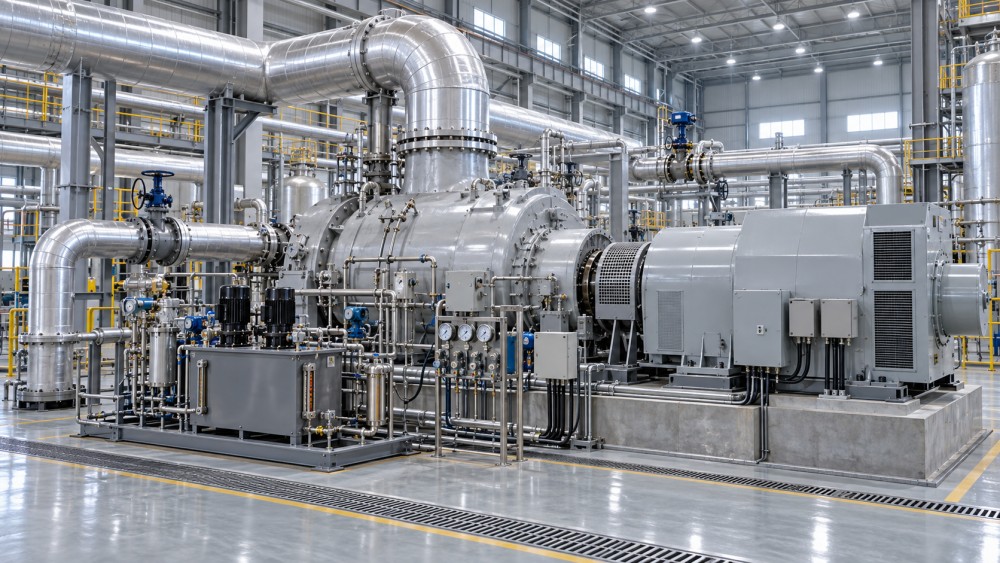
Technical evaluation should examine the full train: turbine, gearbox where applicable, generator, governing system, lubricating-oil unit, sealing system, turning gear, inlet and extraction valves, instrumentation, protection devices, and local control panel. Boundaries between these items can create problems if responsibility is unclear. For example, torsional behavior, coupling selection, generator protection coordination, and lube-oil system sizing may involve several vendors. The purchase specification should state who owns the integrated design review.
Mechanical design details matter because captive plants often expect long operating periods between planned shutdowns. Buyers can ask for information on casing construction, rotor arrangement, blade attachment methods, bearing type, gland sealing arrangement, materials proposed for high-temperature components, and inspection access. The goal is not to prescribe every design feature, but to understand whether the design is suited to steam temperature, cycling duty, contamination risk, and maintenance capability at the site.
A supplier’s engineering response should also identify assumptions and limits. If performance depends on steam purity, a maximum inlet temperature ramp, a specified backpressure, or a minimum cooling-water condition, those constraints should appear clearly in the offer. Hidden assumptions are more problematic than stated limitations because they are likely to emerge after the purchase order is placed.
Compare Performance Guarantees on a Like-for-Like Basis
Guaranteed output and steam rate are useful comparison points only when the test conditions are aligned. Procurement teams should create a bid comparison sheet that records the exact inlet condition, exhaust or condenser pressure, extraction flow, generator terminal conditions, auxiliary power treatment, and allowable measurement tolerances used by each bidder.
Part-load performance deserves more attention than it often receives. A turbine designed around a high-flow point may spend much of its operating life at lower load. Throttling losses, extraction control requirements, and changing exhaust conditions can materially affect the useful power recovered from the steam system. The buyer does not need a supplier to promise identical efficiency across all points, but should request predicted performance at operating conditions that reflect the likely production schedule.
Performance guarantees should be paired with a realistic acceptance-test framework. The contract should define the test boundary, test steam conditions, instrument responsibilities, correction methods, and treatment of conditions outside the supplier’s control. If a full-site test cannot replicate the contractual condition, the parties should agree in advance on the engineering method used to evaluate compliance.
Quality Assurance Should Follow the Critical Components
Steam turbines contain rotating and pressure-retaining parts whose quality cannot be confirmed by visual inspection after installation. Procurement planning should identify the components that require documented manufacturing and inspection controls. Depending on the project scope and applicable code requirements, this may include material certificates, heat-treatment records, non-destructive examination records, rotor balancing documentation, dimensional inspection reports, pressure-test records for applicable systems, and factory mechanical run-test documentation where included.
A useful quality plan identifies hold points and witness points before manufacturing begins. The buyer may wish to review critical material traceability, rotor machining stages, blade installation, final balancing, assembly checks, and factory testing. The required level of surveillance should reflect project risk. A small, standardized package may need a simpler inspection plan than a custom extraction-condensing turbine with complex auxiliaries, but both benefit from clear records and defined acceptance criteria.
Documentation must be usable at the site. General arrangement drawings, foundation loads, nozzle loads, piping and instrumentation diagrams, electrical connection details, control narratives, alarm and trip lists, preservation instructions, and recommended spares should arrive early enough to support civil, piping, electrical, and control-system work. Late document delivery can delay the project even when the turbine itself is close to shipment.
Delivery Risk Is Often Hidden in Package Interfaces
Delivery dates should be reviewed alongside the supplier’s scope, manufacturing dependencies, and interface responsibilities. Turbine projects can be delayed by long-lead forgings, control components, generator materials, specialty valves, instrumentation, or auxiliary skids. A delivery commitment is more useful when it is supported by a manufacturing schedule showing design approval, material release, fabrication, assembly, inspection, testing, packing, and shipment milestones.
For procurement teams, the key distinction is between a turbine shipment date and a plant-ready package date. A turbine may arrive on time while essential control hardware, oil-system components, generator accessories, documentation, or commissioning support remain incomplete. The purchase order should state what constitutes complete delivery and list the documents, loose items, special tools, consumables, and preservation materials that must accompany the package.
Site support also warrants a defined scope. Installation and alignment quality strongly affect bearing performance, vibration behavior, and coupling reliability. The agreement should clarify whether the supplier provides supervision for erection, pre-commissioning checks, first roll, synchronization, load testing, and operator training. It should also specify response expectations for technical questions during start-up, without assuming that routine site work is automatically included.
Evaluate Lifecycle Exposure Alongside Initial Price
The lowest evaluated purchase price can be misleading if it excludes critical auxiliaries, offers limited spare-parts coverage, or provides insufficient documentation for maintenance planning. Lifecycle evaluation does not require an exact decades-long cost forecast. It requires identifying the commercial and operational exposures that are likely to matter at the plant.
Common items include recommended commissioning spares, two-year operating spares, long-lead rotor or blade components, filter elements, bearings, seals, valve parts, instrumentation consumables, and special maintenance tools. Buyers should ask whether spare parts are proprietary, what identification system is used, and what information will be retained to support future replacements. For facilities with limited shutdown opportunities, the availability of critical spares may be more valuable than a small saving in initial equipment price.
The service model should be considered in the context of the owner’s internal capabilities. Some plants have experienced rotating-equipment teams and can manage routine inspections with supplier documentation. Others require stronger field support, troubleshooting assistance, and training during early operation. Neither approach is inherently better; the right choice depends on the risk tolerance, maintenance organization, and remoteness of the site.
A Practical Supplier Evaluation Sequence
Procurement decisions are more defensible when technical clarification occurs before final commercial ranking. A workable sequence begins with a complete duty specification, followed by a compliance review that identifies deviations rather than burying them in quotation notes. The project team can then compare predicted performance at agreed operating points, assess the completeness of the package scope, review quality and document plans, and evaluate schedule credibility.
Commercial negotiation should retain visibility of the technical assumptions that shaped the price. If a bidder revises output, changes the generator scope, removes a test, alters the valve arrangement, or assumes different site utilities, the evaluation should be updated. A turbine package is not equivalent merely because its headline power rating matches another offer.
The most reliable selection is usually the one that makes the plant’s steam and power balance workable under normal operation, anticipated variation, and credible upset conditions. A capable steam turbine supplier should be able to demonstrate that fit through clear technical assumptions, traceable quality controls, realistic delivery commitments, and an acceptance scope that can be verified after installation.
Related News
- How Can Technical Buyers Assess Supplier Advantages Objectively?Sep 28, 2026How can I assess supplier advantages without relying on marketing claims? Use traceable tests, lifecycle risk checks, delivery evidence, and support metrics.
- Evaluating Steam Turbine Suppliers for Captive Power Plant ProjectsSep 28, 2026Steam turbine supplier evaluation for captive power plants: compare steam balance fit, guarantees, quality controls, delivery risk, and lifecycle support before selecting a partner.
- How to verify suppliers listed in a power system supplier directorySep 19, 2026Power system supplier directory verification guide: validate legal identity, technical compliance, factory quality, delivery capacity, references, and risk before selecting electrical equipment partners.
- What to verify before choosing an energy storage system supplierSep 17, 2026Energy storage system supplier checklist: verify system fit, certifications, safety, warranty, delivery capacity, and service support before committing to a contract.
Related News
- 00
0000-00
How smart switchgear condition monitoring detects early faults - 00
0000-00
How industrial infrastructure development can reduce project delivery risk - 00
0000-00
How to size power equipment for factories without overbuilding capacity - 00
0000-00
How efficiency evolution in automation is reshaping factory energy use - 00
0000-00
When market scanning services are worth the investment