
How Often Should Industrial Circuit Breakers Be Tested?
How often should industrial circuit breakers be tested? The answer depends on equipment criticality, operating environment, load conditions, and applicable standards.
Regular testing helps facility managers identify hidden faults, maintain protection reliability, reduce unplanned downtime, and support safer, more efficient power distribution across industrial operations.
For most industrial facilities, circuit breaker testing should be planned through a risk-based maintenance program rather than a single universal calendar interval.
Critical breakers may require annual verification and periodic outage testing, while lower-risk distribution breakers can often follow longer intervals supported by condition evidence.
The central question is not simply how old a breaker is. It is whether the device will interrupt, isolate, and coordinate protection when needed.
Start With a Risk-Based Testing Interval
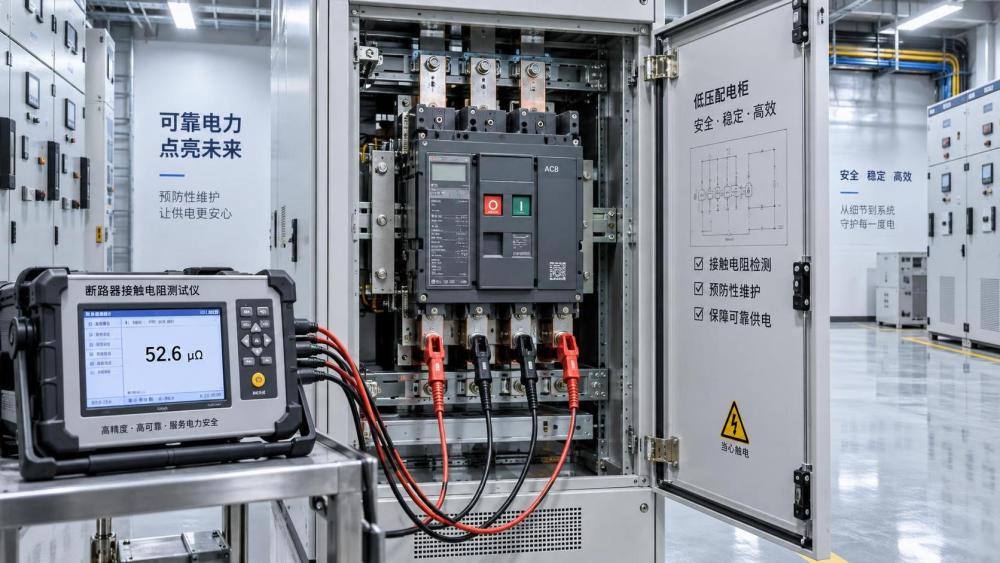
Industrial circuit breakers protect people, motors, transformers, cables, switchgear, and production assets from overloads, short circuits, and ground faults.
Because a breaker may remain closed for years, visual normality does not prove that its mechanical, electrical, or protective functions remain dependable.
A practical baseline is annual visual inspection for important equipment, with functional or electrical testing scheduled according to risk, manufacturer guidance, and service history.
For critical low-voltage air circuit breakers, many facilities conduct detailed maintenance and performance testing every one to three years during planned shutdowns.
Molded-case circuit breakers serving ordinary branch circuits may receive inspection annually and more extensive testing every three to five years, depending on conditions.
Medium-voltage vacuum, SF6, or air circuit breakers commonly require comprehensive condition assessment at intervals established by operating duty and original equipment recommendations.
Breakers connected to emergency systems, data centers, process safety systems, primary substations, or major production lines deserve shorter and more formal testing cycles.
A failed breaker on a nonessential lighting feeder creates inconvenience. A failed main incomer can escalate a small fault into widespread equipment damage.
Facilities should therefore classify breakers by consequence of failure before deciding testing frequency, resource allocation, outage windows, and acceptable maintenance deferral periods.
What Changes the Recommended Test Frequency?
Environmental stress is one of the strongest reasons to shorten intervals. Heat, moisture, dust, corrosive gases, vibration, and contamination accelerate insulation and mechanism deterioration.
Mining, marine, chemical, food-processing, pulp, cement, and heavy manufacturing sites generally expose switchgear to more severe conditions than clean commercial electrical rooms.
High ambient temperatures can harden lubricants, weaken insulation, and increase resistance at connections. Moisture can promote tracking, corrosion, and unexpected protective device operation.
Breakers that operate frequently also require more attention. Repeated switching, motor starting, capacitor bank switching, and load transfer cause mechanical and contact wear.
Fault interruption duty is particularly important. Any breaker that has cleared a significant short circuit should be inspected before returning to normal service.
A breaker can successfully open during a fault while still sustaining contact erosion, mechanism stress, damaged arc chutes, or reduced future interrupting capability.
Load changes should also trigger review. Expansion projects, variable-speed drive installations, new transformers, distributed generation, or larger motors can alter available fault current.
When system configuration changes, the existing protection settings and breaker interrupting ratings may no longer match the electrical system’s actual risk profile.
Age matters, but it should not be used alone. A well-maintained older breaker can outperform a neglected newer unit installed in a harsh environment.
Which Tests Provide Meaningful Evidence?
Effective testing combines basic inspection with measurements that reveal degradation. The exact scope should match breaker type, voltage class, criticality, and planned outage duration.
Visual inspection should check enclosure integrity, overheating evidence, loose hardware, contamination, corrosion, labels, interlocks, shutters, and signs of unauthorized modification.
Technicians should look for discoloration around terminals, melted insulation, cracked molded cases, unusual odors, damaged arc barriers, and moisture inside compartments.
Mechanical operation testing confirms that opening and closing mechanisms move freely. It can reveal weak springs, binding linkages, worn latches, and failing charging motors.
Contact resistance testing identifies excessive resistance across closed poles. Rising values can indicate contamination, contact wear, poor alignment, inadequate pressure, or loose internal connections.
Insulation resistance testing evaluates the condition of insulating materials between poles and from live parts to ground. Results should be trended over time.
Primary injection testing verifies the breaker’s complete current path and protective response under applied current. It is valuable for confirming integrated performance after maintenance.
Secondary injection testing focuses on electronic trip units, relays, sensors, and programmed settings without passing high current through the breaker power circuit.
Trip testing should confirm pickup levels, time delays, instantaneous response, ground-fault functions, and communication features where intelligent electronic trip units are installed.
For medium-voltage breakers, common tests may include timing analysis, travel measurement, coil testing, vacuum interrupter integrity testing, and contact wear evaluation.
Thermal scanning is useful while equipment is energized. Infrared inspections can find abnormal heating, although they do not replace outage-based mechanical or protection testing.
How Often Should Critical Breakers Be Tested?
Critical breakers should receive a documented review at least annually, including operating history, loading data, alarms, thermal findings, fault events, and visible condition.
Where the breaker protects life-safety systems, emergency generation, essential process loads, or primary distribution, annual functional verification is often a prudent minimum.
Detailed offline testing may be performed annually, every two years, or every three years, depending on redundancy, system duty, equipment design, and regulatory requirements.
Facilities with no redundant supply should consider the financial impact of a breaker failure. Shorter testing intervals can be justified by avoided outage costs.
Data centers, semiconductor plants, continuous-process facilities, hospitals, and high-throughput logistics sites should evaluate breaker maintenance as a business continuity control.
In these environments, testing frequency must reflect the consequences of a failed transfer, delayed trip, nuisance trip, or inability to isolate a fault safely.
Criticality should include more than production revenue. Consider personnel safety, environmental release potential, contractual penalties, replacement lead times, and downstream recovery duration.
A risk register that ranks electrical assets helps maintenance teams explain why similar-looking breakers deserve different testing investments and outage priorities.
When Can Testing Intervals Be Extended?
Longer intervals may be reasonable when breakers operate in clean, climate-controlled conditions, show stable test trends, carry moderate loads, and protect noncritical circuits.
Extension should be evidence-based, not simply budget-driven. Historical test results, infrared surveys, event records, manufacturer recommendations, and operating conditions must support the decision.
Condition-based maintenance becomes especially useful in large electrical portfolios where testing every device at the same interval would consume excessive labor and outage time.
Digital switchgear, trip-unit diagnostics, event logs, remote monitoring, and power quality data can improve visibility between scheduled maintenance activities.
However, monitoring does not eliminate the need for physical inspection. Mechanism lubrication, contact condition, insulation health, and interlocks may require direct verification.
Do not extend intervals when records are incomplete, previous test values are unavailable, equipment has suffered a fault, or environmental conditions have changed materially.
Testing deferrals should be documented with an owner, rationale, interim monitoring actions, and a defined next review date instead of becoming permanent informal exceptions.
Use Standards and Manufacturer Guidance Correctly
Applicable standards provide structure, but they do not replace engineering judgment. Requirements vary by region, voltage class, industry, insurer, and facility risk tolerance.
Maintenance teams commonly consult manufacturer manuals, local electrical regulations, NFPA guidance where applicable, NETA testing specifications, and internal reliability procedures.
Manufacturer documentation is particularly important because breaker designs differ in lubrication requirements, permissible test methods, torque values, timing limits, and replacement parts.
Older equipment can present additional challenges. Original instructions may be unavailable, spare parts may be obsolete, and modern test expectations may exceed historic practices.
In such cases, an engineering assessment should determine whether refurbishment, retrofit, replacement, or enhanced monitoring provides the most defensible reliability outcome.
Testing should also be coordinated with arc-flash studies and protection coordination reviews. A correctly maintained breaker can still perform poorly with incorrect settings.
Whenever settings are changed, personnel should verify the approved protection study, update labels and records, and confirm that changes are implemented accurately.
Build a Practical Circuit Breaker Testing Program
A workable program begins with a complete asset register. Record breaker type, rating, voltage, location, manufacturer, installation date, criticality, and maintenance history.
Next, identify operating conditions including normal load, peak load, switching frequency, fault history, ambient conditions, contamination exposure, and upstream protection arrangement.
Assign each breaker a maintenance category. Categories should define inspection frequency, test scope, responsible personnel, shutdown requirements, acceptance criteria, and escalation actions.
Establish baseline measurements after commissioning, overhaul, or major repair. Future results become more useful when compared with the breaker’s own historical trend.
Document every result in a consistent format. Include test equipment, environmental conditions, settings, measured values, observations, corrective actions, and photographs where relevant.
Trend analysis often reveals deterioration earlier than pass-or-fail decisions alone. A gradual resistance increase may justify intervention before a threshold is exceeded.
Coordinate testing with planned production outages whenever possible. Bundling electrical maintenance with mechanical shutdown work reduces disruption and improves permit planning.
Still, avoid postponing urgent work solely to wait for the next major outage. Abnormal heat, damaged equipment, repeated trips, or fault duty require prompt assessment.
Competence matters as much as frequency. Testing personnel need appropriate training, calibrated instruments, safe work procedures, and authority to escalate serious findings.
Common Mistakes That Create Hidden Risk
One common mistake is treating all circuit breakers identically. Equal intervals may under-maintain critical equipment while wasting resources on low-consequence assets.
Another mistake is relying only on infrared scans. Thermal imaging is valuable, but a cool breaker can still have defective trip logic or mechanical failure.
Some facilities test trip units but overlook the power path, contacts, mechanisms, racking systems, interlocks, and auxiliary circuits that support safe operation.
Others perform tests without reviewing results against prior values. Data that is never trended provides limited insight into developing equipment condition.
Maintenance records should not merely prove that work occurred. They should support decisions about repair, replacement, interval adjustment, spare strategy, and capital planning.
Finally, avoid using breaker operation as a routine switching method unless the device is designed and maintained for that duty. Unnecessary operations add wear.
Conclusion: Test Frequency Should Match Consequence and Condition
There is no single answer to how often industrial circuit breakers should be tested. The right interval depends on criticality, duty, environment, condition, and governing requirements.
Annual review is a sensible foundation for important assets, while detailed electrical and mechanical testing should be scheduled through a documented risk-based maintenance strategy.
Critical breakers, harsh environments, frequent operations, high fault duty, and changing system conditions all justify more frequent assessment and stronger evidence of performance.
By combining inspection, functional testing, measured condition data, protection review, and accurate records, industrial operators can reduce uncertainty before a failure exposes it.
A disciplined breaker testing program protects more than electrical equipment. It supports worker safety, production continuity, asset life, compliance confidence, and resilient power distribution.