
High voltage power line maintenance should be brought forward when the condition of the asset is deteriorating faster than the existing maintenance interval assumes. The decisive issue is not whether a line has reached a calendar-based service date; it is whether inspection evidence shows that the probability or consequence of failure has materially changed.
Accelerating insulation degradation, repeat defects at the same location, abnormal temperature patterns, new environmental exposure, altered loading conditions, and compromised protective clearances are all reasons to reassess the work schedule. Waiting for the next planned outage can turn a manageable intervention into an unplanned outage, a safety event, or a more extensive restoration scope.
Move the maintenance date when condition data changes the risk picture
A maintenance interval is a planning assumption, not a guarantee of asset condition. It is set using design characteristics, historical inspection findings, access constraints, outage windows, environmental conditions, and expected duty. When one or more of those assumptions no longer holds, the interval should be reconsidered.
The most useful question is: What has changed since the line was last judged fit for continued service? A single unusual reading does not always justify immediate intervention. A confirmed trend, a recurring location-specific anomaly, or a defect that weakens a critical barrier often does.
Condition-based decisions are strongest when several evidence sources point in the same direction. For example, a thermal anomaly on a connector has greater significance if visual inspection also identifies corrosion, loosened hardware, strand damage, or a history of elevated resistance at that joint. Likewise, a suspected insulator problem carries more weight when contamination, visible surface damage, leakage indications, and weather-related flashover events are connected.
The aim is not to bring forward every scheduled task after every abnormal observation. It is to distinguish defects that can be monitored safely from defects whose progression, failure mode, or operational consequence requires an earlier outage or immediate control measure.
Insulation deterioration is one of the clearest triggers
Insulation systems rarely fail without a preceding change in condition, but the warning signs differ by line design and environment. Composite, porcelain, and glass insulators do not degrade in the same way, and a defect that appears superficial may be operationally important if it compromises electrical stress distribution or mechanical integrity.
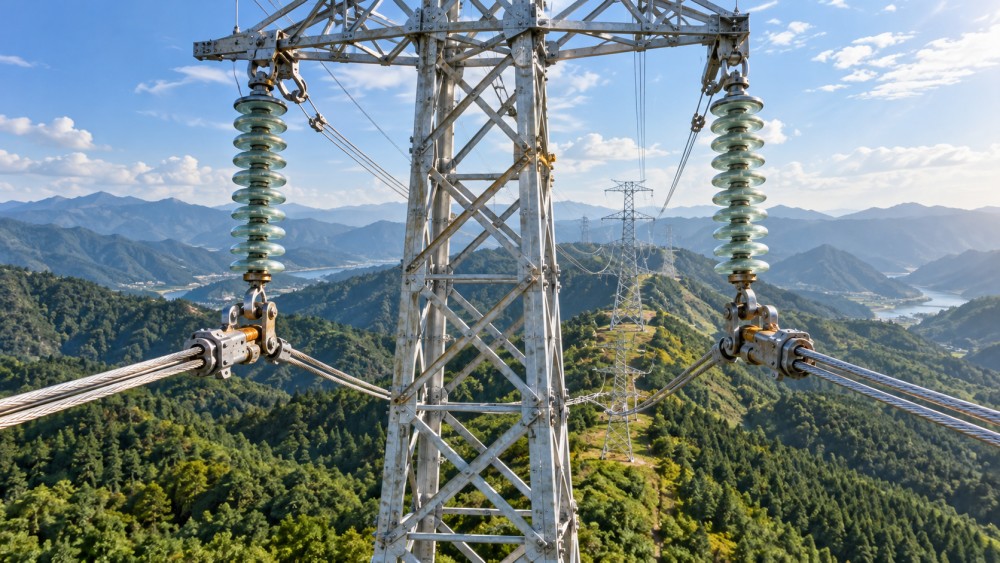
Maintenance should be advanced when inspections identify cracked or fractured units, puncture indicators, damaged sheds, exposed cores, severe hardware corrosion, deteriorated seals, persistent contamination, or signs of tracking and erosion. On polymeric insulators, loss of hydrophobic performance alone does not automatically mean replacement is required, but persistent wetting, pollution deposits, surface degradation, and electrical activity deserve closer evaluation as a combined condition pattern.
Contamination requires particular care because the risk is not static. A line that performed adequately under dry conditions may become vulnerable when salt, industrial deposits, dust, agricultural residues, smoke, or moisture produce a conductive surface film. If a pollution source has changed, cleaning intervals and inspection timing may need revision even though the installation itself has not changed.
Evidence of repeated flashover, visible discharge damage, unexplained protection operations, or leakage-current concerns should not be handled as an isolated incident until the insulation coordination, contamination level, hardware condition, and grounding path have been reviewed. A replacement program may not be necessary, but a deferred inspection date may no longer be defensible.
Thermal anomalies need a cause-based response, not a temperature-only response
Infrared inspection is valuable because it can reveal elevated resistance or abnormal current paths before visible damage occurs. Yet a hot component is not automatically a failing component. Load level, wind, solar heating, emissivity, viewing angle, distance, and comparison with equivalent phases or adjacent structures all affect interpretation.
Maintenance should be brought forward when the thermal pattern is repeatable under comparable operating conditions, grows over successive inspections, or is accompanied by signs of connection distress. Relevant findings include overheated dead-end clamps, jumpers, splice sleeves, terminals, bonding connections, disconnect contacts, and grounding joints. A localized hot spot at a current-carrying connection can indicate loose hardware, oxide formation, inadequate contact pressure, corrosion, conductor strand damage, or a mismatch between the component and its duty.
Load-normalized comparison is more informative than viewing a thermal image in isolation. A connection that appears warm during a high-load period may be acceptable relative to similar components. A connection that is distinctly hotter than its equivalent on another phase under similar load deserves a more urgent assessment. The same principle applies when comparing the present image with prior images taken under similar conditions.
Where the likely failure mode includes connector separation, conductor drop, arcing, or fire exposure near structures or vegetation, the consequence can justify earlier work even before the defect reaches a severe visual stage. Temporary load management, increased inspection frequency, or operational restrictions may be necessary while an outage is arranged.
Recurring faults are evidence that the original repair or diagnosis was incomplete
A repeated trip, recurring earth-fault indication, recurrent communication alarm, or recurring defect report at the same span should not be treated simply as another routine callout. Repetition changes the maintenance decision because it suggests that the defect mechanism remains active.
The key task is to separate symptoms from the underlying cause. A repeated outage associated with a structure may involve conductor clearance, insulation contamination, a damaged crossarm, wildlife activity, vegetation encroachment, weak grounding, lightning exposure, or an intermittent connection. Replacing only the visibly affected component can restore service without removing the source of recurrence.
Bringing work forward is justified when recurrence narrows the likely location or failure mechanism, especially where the next event could cause equipment damage or present a public-safety hazard. The revised work scope should be based on a defect hypothesis that can be tested: inspect adjacent fittings, verify torque and contact surfaces where permitted by procedure, assess grounding continuity, review protection records, inspect line clearances, and examine the surrounding environment.
Operational records matter here. Time of event, weather conditions, load state, protection targets, fault location estimates, previous repair history, and inspection photographs can reveal whether apparently separate incidents are connected. Without that record, teams may repeatedly repair the consequence while missing the initiating condition.
Weather exposure can shorten an otherwise reasonable interval
Severe weather does not always leave immediately visible damage. Wind loading can loosen fittings, shift conductor position, damage dampers, or create fatigue concerns at attachment points. Ice and snow can impose mechanical loads beyond ordinary duty. Lightning can damage insulators, arresters, grounding components, and fittings. Flooding, coastal spray, wildfire smoke, sand, and airborne pollutants can all change the electrical or mechanical condition of a line.
Maintenance should be advanced after an event when there is credible exposure to damage and the affected route includes critical crossings, difficult-access structures, known weak points, or areas where a failure would have elevated consequences. A targeted post-event inspection is often more useful than automatically advancing maintenance across an entire network. The inspection should focus on the specific stress imposed by the event: mechanical alignment after wind, contamination and washout after storms, grounding and foundation condition after flooding, or surface damage following fire exposure.
Weather-related inspection also needs to account for delayed effects. A conductor may remain energized after a storm while a shifted fitting, compromised seal, or partially damaged insulator continues to degrade. Restoring power is therefore not equivalent to confirming long-term serviceability.
Load growth and changed operating duty can invalidate the old maintenance plan
A line maintained for one loading profile may face a different risk profile after load transfers, generation interconnection, industrial expansion, altered power flows, or revised contingency arrangements. Higher current increases thermal stress at joints and accessories. Changed fault levels can affect the duty imposed on equipment and grounding systems. Repeated overload operation may accelerate deterioration that was not apparent under prior service conditions.
Maintenance planning should be revisited when system operations indicate that a line is now carrying sustained or recurrent duty close to a level not reflected in its original inspection regime. The review should include conductor temperature behavior, connection condition, sag and clearance margins, equipment ratings, protection settings, and the availability of alternative supply paths during maintenance.
There is an important distinction between a line that experiences occasional high loading and one whose operating pattern has fundamentally shifted. The latter may need a revised asset strategy, not merely an early corrective visit. If the loading change is temporary, targeted monitoring and a defined return-to-normal trigger may be more appropriate than permanent changes to the interval.
Mechanical defects should be prioritized by progression and consequence
Not every damaged component requires an immediate outage, but mechanical defects can become urgent when they affect load-bearing capability or conductor security. Corroded fittings, damaged vibration dampers, broken armor rods, conductor strand damage, leaning structures, foundation deterioration, loose crossarms, cracked poles, damaged guy wires, and altered clearances require evaluation in terms of what can happen before the next planned intervention.
Particular attention is warranted where a defect can progress rapidly under cyclic loading. Wind-induced vibration, galloping, thermal expansion, and repeated tension changes can turn minor hardware movement into fatigue damage. A damaged damper or spacer may appear secondary, yet its absence can permit motion that accelerates conductor or fitting wear.
Clearance findings should also be treated as dynamic rather than fixed. Vegetation growth, conductor sag under temperature, structure movement, land-use changes, and new construction can all reduce separation. If a measured clearance is already marginal under the observed condition, deferring work until a future routine cycle may leave too little margin for seasonal or operational variation.
Use a defensible escalation path
An early-maintenance decision should create a clear operational response, not merely a note that an issue was found. The response generally needs four elements: confirmation of the finding, assessment of likely failure mode, control of immediate risk, and scheduling of permanent correction.
Confirmation may require a repeat thermal survey under comparable load, close visual inspection, drone imagery where permitted, electrical testing, review of protection data, or engineering assessment. The method should match the uncertainty. If a loose connector is strongly indicated by thermal and visual evidence, extensive additional monitoring may add little value. If an image is ambiguous because of weather or load conditions, verification before requesting an outage can prevent unnecessary work.
Immediate controls may include restricting access, increasing patrol frequency, managing load where system operations allow, establishing a vegetation exclusion response, or applying temporary repair measures approved by the asset owner’s procedures. These controls do not eliminate the defect; they reduce exposure while permanent work is prepared.
Work prioritization should consider more than likelihood of failure. A modest defect on a line serving a sensitive load, crossing a public area, running through a fire-prone corridor, or lacking practical redundancy may warrant earlier attention than a more visible defect on a line with low consequence and easy restoration options. This is why condition severity and business consequence should be assessed separately before combining them into a priority.
What should not trigger premature work by itself
Calendar age, one unverified alarm, a single poor-quality image, or a defect description without location and operating context are weak grounds for advancing high voltage power line maintenance. Unnecessary outages introduce their own safety, reliability, and coordination risks. They can also consume resources needed for defects with clearer urgency.
The opposite mistake is more damaging: treating uncertainty as evidence that nothing needs to be done. When the available information is incomplete but the potential failure mode is serious, the appropriate action is often a prompt, better-targeted inspection rather than passive deferral.
The strongest maintenance decisions are traceable. They record the observed condition, evidence source, date, location, loading or weather context, suspected mechanism, consequence if the defect progresses, temporary controls, and the basis for the revised completion date. That record supports safe handover between shifts, prevents repeat diagnosis, and makes later inspection findings meaningful.
Bringing maintenance forward is justified when waiting no longer represents controlled risk. The practical trigger is not simply that an abnormality exists, but that the abnormality has been confirmed, is worsening or recurring, changes the expected failure consequence, or has emerged under operating conditions different from those on which the original maintenance interval was based.
Related News
- When should high voltage power line maintenance be brought forward?Oct 13, 2026High voltage power line maintenance: learn when worsening insulation, thermal anomalies, recurring faults, weather exposure, or load changes demand earlier action.
- How to size medium voltage cable systems for industrial loadsSep 30, 2026Medium voltage cable systems: learn how to size industrial feeders for ampacity, voltage drop, fault duty, installation conditions, and future expansion.
- What Cable Voltage Rating Should Be Specified in a Tender?Sep 24, 2026What cable voltage rating should a tender specify? Learn how U0/U (Um), earthing, fault duration, standards, and surge duty shape a compliant cable requirement.
- What Causes Power Cable Insulation to Fail in Service?Sep 11, 2026What causes power cable insulation failure in service? Discover how heat, moisture, mechanical damage, electrical stress, and poor installation drive outages—and how to prevent them.
Related News
- 00
0000-00
How SCADA grid automation supports remote feeder fault isolation - 00
0000-00
How much does arc-resistant construction add to switchgear prices? - 00
0000-00
How a decarbonization process framework turns targets into action - 00
0000-00
How variable frequency drives cut energy use in water treatment - 00
0000-00
When should high voltage power line maintenance be brought forward?